






What's Happening?
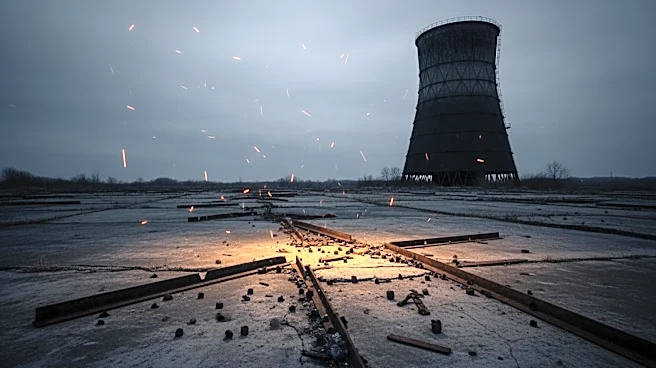
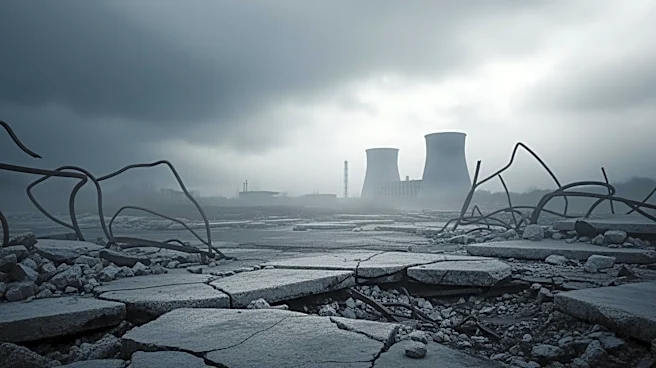
On the 40th anniversary of the Chernobyl nuclear disaster, Ukrainian President Volodymyr Zelenskyy accused Russia of committing 'nuclear terrorism' by flying attack drones over the Chernobyl site. Zelenskyy highlighted the risk of a radioactive leak due
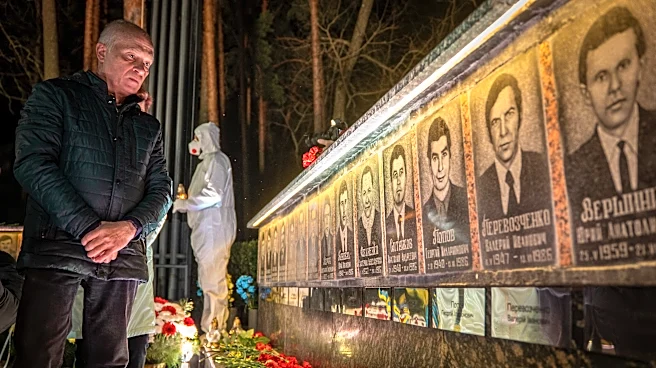
to these actions and called for international intervention to stop Russia's attacks. The anniversary was marked by a midnight commemoration in Slavutych, where people gathered to honor those who died in the 1986 disaster. The Chernobyl explosion, caused by a safety test error, remains the worst civilian nuclear disaster in history, with long-lasting effects on Ukraine, Belarus, and Russia. The ongoing conflict in Ukraine, including recent Russian drone attacks, underscores the continued tensions in the region.
Why It's Important?
The accusations of 'nuclear terrorism' by Ukraine against Russia highlight the ongoing security threats in the region and the potential for catastrophic consequences. The Chernobyl disaster serves as a stark reminder of the dangers of nuclear incidents, and the current situation raises concerns about the safety of nuclear sites in conflict zones. The international community's response to these accusations could influence diplomatic relations and efforts to de-escalate tensions. Additionally, the continued conflict in Ukraine has broader implications for European security and stability, as well as for global energy markets, given the region's strategic importance.