



What's Happening?
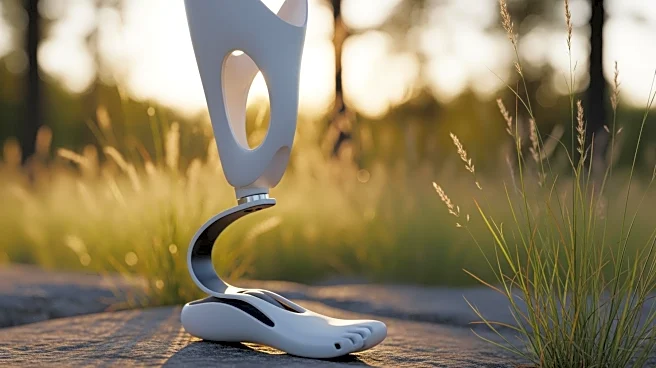
An endangered Egyptian vulture, which lost a leg after being caught in a trap, has been successfully released back into the wild in the Golan Heights. The vulture underwent a groundbreaking rehabilitation process involving a custom 3D-printed prosthetic
leg. This effort was led by the Nature and Parks Authority in collaboration with the Wildlife Hospital at the Ramat Gan Safari. The vulture's leg was amputated, and a prosthetic was designed and fitted, marking a significant milestone in wildlife rehabilitation. The vulture, a female that hatched in 2019, was monitored and tagged as part of a conservation project. Despite the injury, the vulture is now functioning well with the prosthetic and is being tracked via a GPS transmitter.
Why It's Important?
This development is significant as it represents a breakthrough in wildlife conservation and rehabilitation. The successful use of a prosthetic leg in an Egyptian vulture could pave the way for similar treatments for other injured wildlife, potentially saving many animals from euthanasia. The Egyptian vulture population is declining globally, but conservation efforts in Israel have stabilized and improved their numbers. This case highlights the potential for technology and human medical advancements to be adapted for wildlife conservation, offering hope for endangered species.
What's Next?
The vulture will continue to be monitored in the wild to assess the long-term success of the prosthetic. This case will provide valuable insights for future wildlife rehabilitation efforts. Conservationists will likely explore further applications of prosthetic technology for other species. The Nature and Parks Authority will continue its efforts to protect and stabilize the Egyptian vulture population in Israel.
Beyond the Headlines
The collaboration between wildlife conservationists and the human health system in this case underscores the potential for interdisciplinary approaches to solve complex problems. The use of human medical technology in wildlife rehabilitation could lead to new conservation strategies and partnerships. This case also raises awareness about the impact of human activities on wildlife and the importance of innovative solutions to mitigate these effects.