






What's Happening?
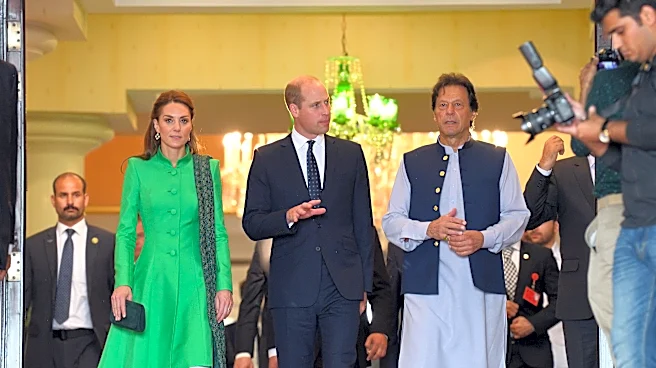
Pakistan and the United Kingdom have agreed to enhance cooperation across several key areas, including security, law enforcement, migration, trade, and investment. This decision followed a meeting in Islamabad between Pakistan's Deputy Prime Minister
and Foreign Minister Ishaq Dar and visiting UK Minister of State for Security Dan Jarvis. The discussions also covered regional and global security environments, with both nations expressing significant concern over terrorism originating from Afghanistan. Specifically, they highlighted the ongoing threat posed by groups like the Tehreek-i-Taliban Pakistan, which operates from within Afghanistan. Both sides emphasized the critical need for a stable and secure Afghanistan to ensure lasting peace and prosperity throughout the region. This agreement builds on previous bilateral counter-terrorism dialogues held in Islamabad.
Why It's Important?
This deepened cooperation between Pakistan and the UK carries significant implications for regional stability and international counter-terrorism efforts. The focus on combating terrorism emanating from Afghanistan underscores a shared concern about the potential for extremist groups to destabilize neighboring countries and beyond. For the U.S. and its allies, such partnerships are crucial in maintaining global security and preventing the resurgence of transnational terrorist networks. Enhanced collaboration in trade and investment could also foster economic growth in Pakistan, potentially reducing factors that contribute to instability. Furthermore, cooperation on migration issues could help manage regional population movements and address humanitarian concerns, which often have broader international ramifications.
What's Next?
Following this agreement, Pakistan and the UK are expected to continue their dialogues under the R4 + E4 framework, indicating further meetings and strategic discussions. The immediate focus will likely be on implementing the agreed-upon measures to counter terrorism, particularly those related to groups operating from Afghanistan. This could involve intelligence sharing, coordinated security operations, and diplomatic efforts to press for a stable Afghanistan. In terms of trade and investment, both nations will likely explore specific projects and policies to facilitate increased economic exchange. The ongoing cooperation on migration will also require continuous policy adjustments and collaborative efforts to manage flows and address related challenges effectively.
Beyond the Headlines
The emphasis on a stable and secure Afghanistan as a cornerstone for regional peace highlights the complex geopolitical dynamics at play. The continued presence and activities of groups like the Tehreek-i-Taliban Pakistan underscore the persistent challenges in post-conflict regions and the difficulties in achieving lasting security. This situation also brings to light the broader ethical and strategic considerations for international powers in engaging with countries that face internal and external security threats. The long-term success of this cooperation will depend not only on security measures but also on addressing underlying socio-economic factors that can fuel extremism and instability, making the trade and investment aspects equally critical for sustainable peace.