







What's Happening?
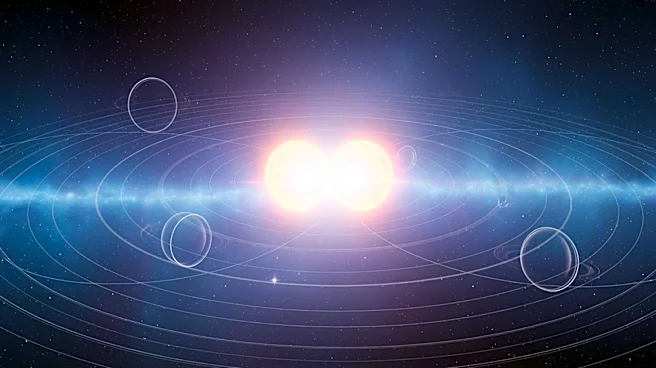
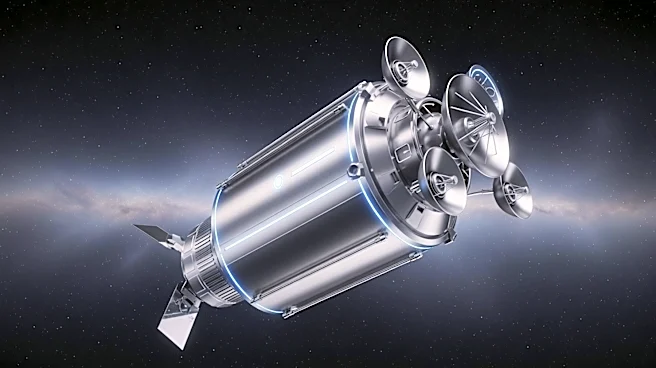
Canadian scientists are preparing to launch a new satellite, POET (Photometric Observations of Exoplanet Transits), to search for exoplanets orbiting stars. Scheduled for launch in 2029, POET will focus on detecting planets around orange, red, and brown
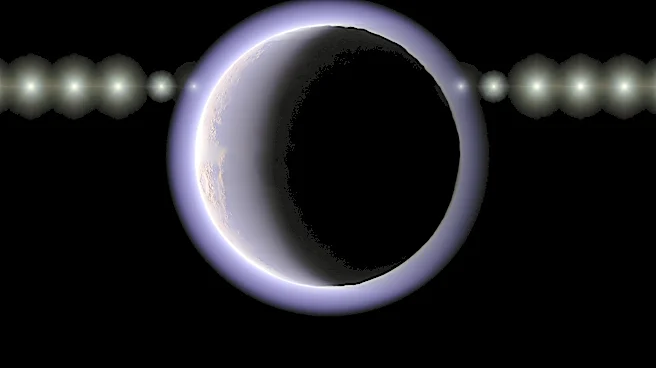
dwarfs, which are smaller and cooler than the Sun. The satellite will be equipped with a 20-centimeter mirror telescope capable of observing in both infrared and ultraviolet spectrums, enhancing its sensitivity compared to previous missions. The mission builds on Canada's experience with earlier space telescopes, MOST and NEOSSat, and aims to identify Earth-sized exoplanets with orbital periods between 7 to 50 days. Researchers have narrowed down potential targets to 100-300 priority candidates within 100 parsecs of Earth.
Why It's Important?
The POET mission represents a significant advancement in the search for exoplanets, particularly around cooler stars, which are abundant in the galaxy. By focusing on these stars, POET could uncover new Earth-like planets, contributing to our understanding of planetary formation and the potential for life beyond our solar system. The mission's use of infrared and ultraviolet observations will allow for more precise measurements, potentially leading to groundbreaking discoveries in exoplanetary science. This initiative also highlights Canada's growing role in space exploration and its commitment to advancing astronomical research.
What's Next?
Following the launch of POET, scientists will begin analyzing data to identify and confirm the presence of exoplanets around the targeted stars. The mission's findings could prompt further studies and potentially lead to the development of more advanced telescopes. Additionally, the success of POET may encourage international collaborations and inspire similar missions aimed at exploring other regions of the galaxy. The data collected could also inform future efforts to study the atmospheres and compositions of newly discovered exoplanets.