




What's Happening?
Rhode Island's congressional delegation is demanding answers from federal agencies regarding the denial of $19 million in federal disaster aid following a February 2026 blizzard. U.S. Sens. Jack Reed and Sheldon Whitehouse, along with U.S. Reps. Seth
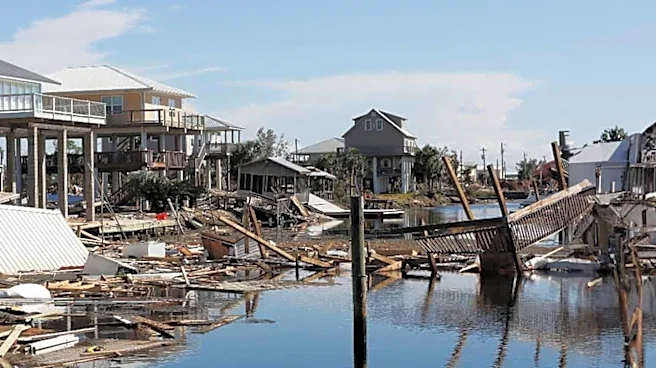
Magaziner and Gabe Amo, all Democrats, sent a letter to the U.S. Department of Homeland Security and the Federal Emergency Management Agency (FEMA). They are requesting the preservation of all records and communications related to Rhode Island's request for a major disaster declaration. The lawmakers allege that the denial may have been politically motivated, citing reports that President Trump overrode his own agencies' recommendations to deny disaster requests from four Democratic states. Despite damage estimates exceeding FEMA's thresholds for assistance, the state's request was rejected. The delegation highlighted that the storm dropped up to 37.9 inches of snow and caused significant power outages, two fatalities, and hundreds of emergency room visits, with validated damages totaling over $19 million.
Why It's Important?
This situation raises significant concerns about the politicization of federal disaster relief and the equitable distribution of aid to states. If the denial of aid was indeed based on political retribution rather than objective damage assessments, it could undermine public trust in federal emergency response systems. The precedent of a president overriding agency recommendations for disaster relief based on political affiliations could have far-reaching implications for how states prepare for and recover from natural disasters. It also highlights potential vulnerabilities in the disaster declaration process, where executive discretion could supersede expert evaluations. For Rhode Island, the denial of $19 million in aid means the state and its residents must bear the full financial burden of recovery from a severe blizzard, potentially impacting local budgets and the ability to rebuild infrastructure and support affected communities.
What's Next?
The Rhode Island congressional delegation expects a response from the Department of Homeland Security and FEMA, including the preservation and provision of all requested communications and records. Their letter explicitly states that a failure to provide this information would lead them to assume the claim of political retribution is valid. This could lead to further congressional inquiries, potential investigations, or legislative efforts to reform the disaster declaration process to prevent future politicization. The outcome of this request will likely influence public perception of federal disaster response and could prompt other states to scrutinize similar aid denials. Depending on the agencies' response, the delegation may pursue additional actions to ensure accountability and transparency in federal disaster aid decisions.
Beyond the Headlines
The alleged political interference in disaster aid decisions touches upon fundamental principles of federalism and the impartial administration of government services. The idea that a state's political alignment could influence its access to critical recovery funds challenges the notion of a unified national response to crises. This incident could fuel broader debates about the balance of power between the executive branch and federal agencies, as well as the need for clearer, more objective criteria for disaster declarations. Ethically, it raises questions about the responsibility of federal leaders to serve all citizens equally, regardless of political affiliation. Long-term, such actions could erode the cooperative framework between federal and state governments during emergencies, potentially leading to increased state self-reliance or even legal challenges against federal aid decisions.