
What's Happening?
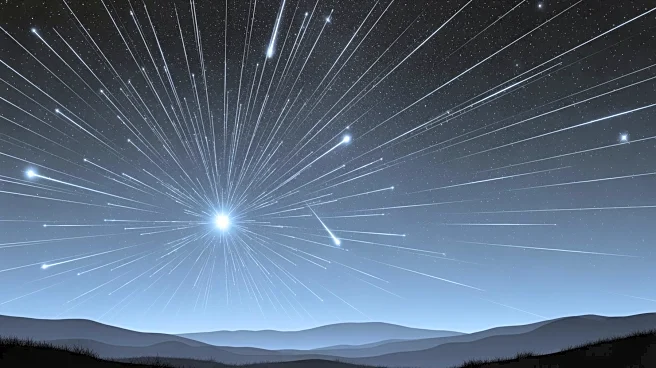
The Geminid meteor shower, one of the most anticipated celestial events of the year, is set to peak tonight, offering skywatchers in the northern hemisphere a chance to witness up to 100 meteors per hour.
The event is particularly favorable this year due to minimal moonlight interference, as the waning crescent moon rises late, providing darker skies for much of the night. The Geminids, known for their bright and colorful meteors, originate from the asteroid 3200 Phaethon, rather than a traditional icy comet. This year's peak viewing times are expected to be from late evening through pre-dawn hours, with the best visibility occurring after midnight. However, weather conditions may vary, with some areas in the U.S. experiencing fog or snow, potentially affecting visibility.
Why It's Important?
The Geminid meteor shower is a significant event for both amateur and professional astronomers, as it provides a reliable opportunity to observe a high number of meteors. This year, the favorable viewing conditions enhance the experience, allowing more people to participate in this natural spectacle. The event also serves as an educational opportunity, highlighting the unique characteristics of the Geminids, which differ from other meteor showers due to their asteroid origin. For the scientific community, the shower offers a chance to study the composition and behavior of meteors as they enter Earth's atmosphere. Additionally, the event draws public interest in astronomy, encouraging people to engage with science and the natural world.
What's Next?
Following the peak of the Geminid meteor shower, skywatchers can look forward to the approach of interstellar comet 3I/ATLAS, which will make its closest pass to Earth on December 19, 2025. Although not visible to the naked eye, the comet presents a rare opportunity for telescopic observation and scientific study. The New Moon on December 19 will also provide optimal conditions for deep-sky observations, as the absence of moonlight will create darker skies. As the month progresses, the December solstice on December 21 will offer the longest night of the year in the Northern Hemisphere, providing extended hours for stargazing.