




What's Happening?
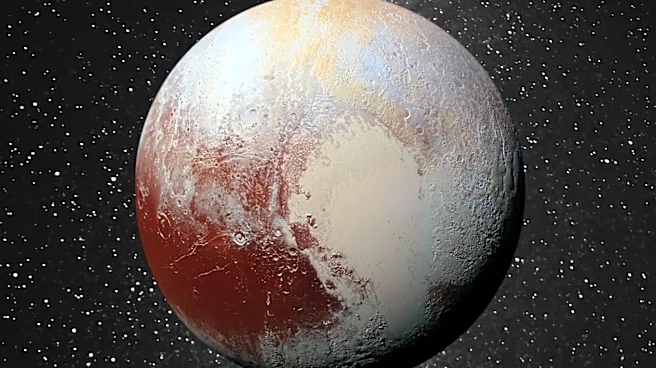
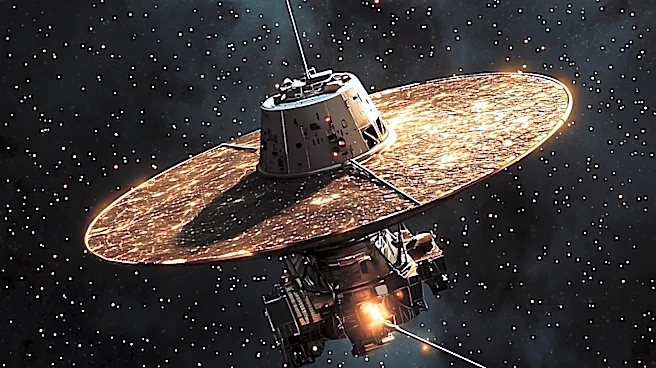
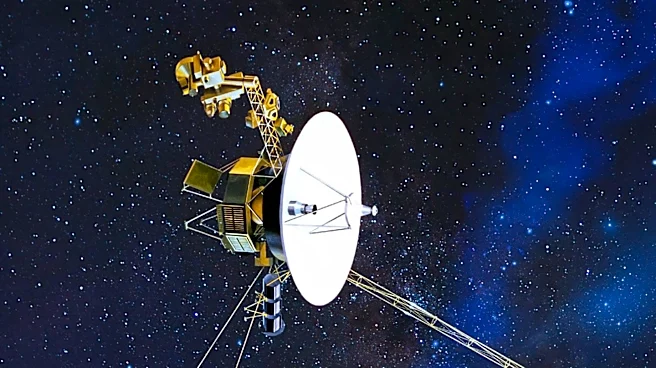
NASA's New Horizons spacecraft is nearing the outer limits of the heliosphere, the magnetic bubble created by the Sun, marking a significant milestone in space exploration. The spacecraft, currently about 66 astronomical units from the Sun, is expected
to encounter the termination shock, where the solar wind slows down dramatically, between 2029 and 2040. This region is crucial for understanding the boundary between the solar system and interstellar space. New Horizons follows the path of Voyager 1 and Voyager 2, which previously crossed this boundary, but will provide new data under different solar conditions.
Why It's Important?
The New Horizons mission is vital for advancing scientific knowledge about the heliosphere and its interaction with interstellar space. By studying this boundary, scientists can gain insights into the Sun's influence and the nature of the interstellar medium. The data collected could improve models of the solar system's outer regions and inform future interstellar travel plans. The mission's findings will also contribute to understanding cosmic radiation shielding, which is essential for the safety of future deep-space missions.
What's Next?
As New Horizons approaches the termination shock, scientists will refine their models to predict the spacecraft's crossing more accurately. The mission team will prepare to capture and analyze data from this region, which could reshape current theories about the solar system's boundaries. The spacecraft's journey will continue to be monitored closely, with the potential for multiple crossings of the boundary due to the dynamic nature of the heliosphere. These observations will be compared with those from the Voyager missions to enhance our understanding of the solar system's edge.