






What's Happening?
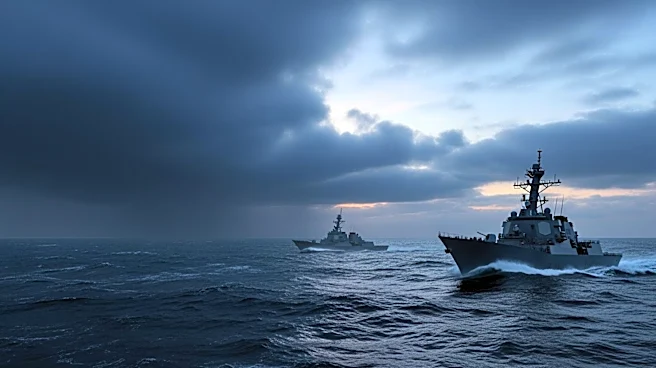
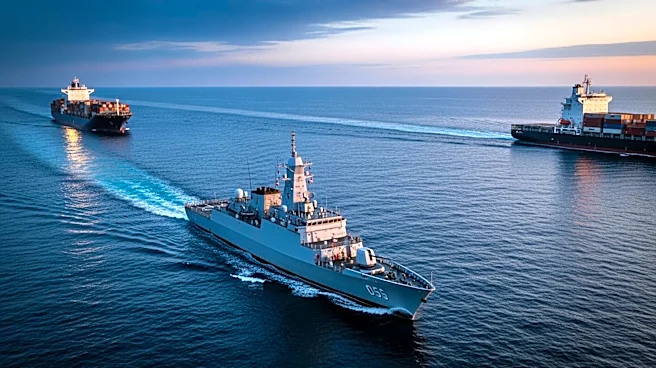
The US Central Command (CENTCOM) announced that its forces intercepted Iranian attacks and responded with self-defense strikes as US warships transited the Strait of Hormuz to the Gulf of Oman. The incident involved Iranian forces launching missiles,
drones, and small boats at US destroyers USS Truxtun, USS Rafael Peralta, and USS Mason. CENTCOM stated that no US assets were hit during the attacks and that they targeted Iranian military facilities responsible for the aggression. The US emphasized that it does not seek escalation but remains ready to protect its forces. This development comes amid conflicting reports from Iran, which claimed significant damage to US vessels, highlighting ongoing tensions despite a ceasefire brokered by Pakistan.
Why It's Important?
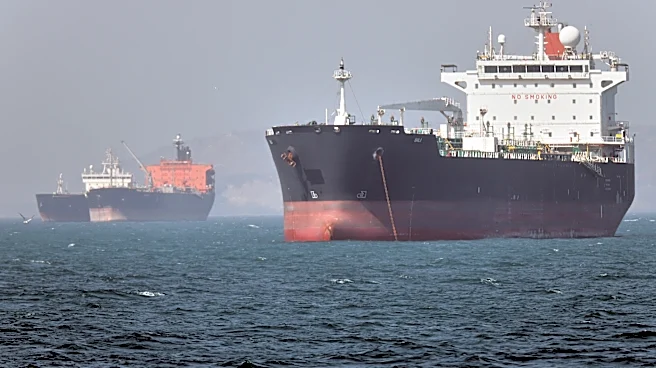
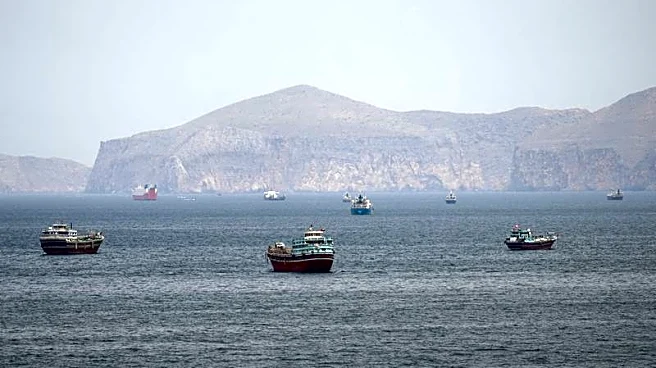
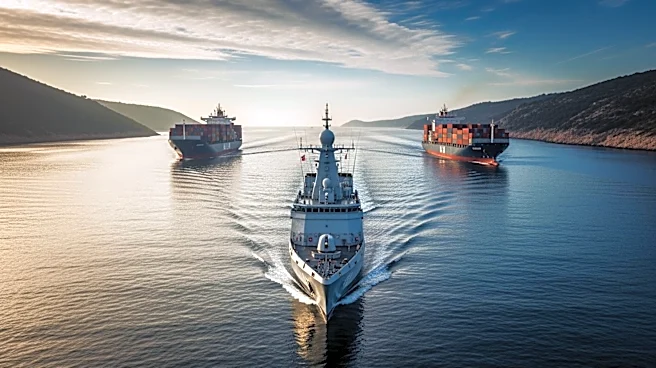
This incident underscores the fragile nature of US-Iran relations and the potential for escalation in a strategically vital region. The Strait of Hormuz is a critical transit route for global oil supplies, and any conflict could disrupt international energy markets. The US's response reflects its commitment to safeguarding its military assets and maintaining freedom of navigation in international waters. The situation also highlights the broader geopolitical tensions in the Middle East, where US-Iranian relations have been strained over nuclear agreements and regional influence. The incident may influence US foreign policy and military strategy in the region, affecting diplomatic efforts and defense postures.
What's Next?
The continuation of the US-Iran ceasefire remains uncertain, with both sides likely to reassess their military and diplomatic strategies. The US may increase its naval presence in the region to deter further aggression, while Iran might seek to leverage the situation in international forums. The incident could prompt discussions among global powers about security in the Strait of Hormuz and the broader Middle East. Additionally, regional allies and partners may be called upon to support de-escalation efforts and ensure the stability of energy supplies.