







What's Happening?
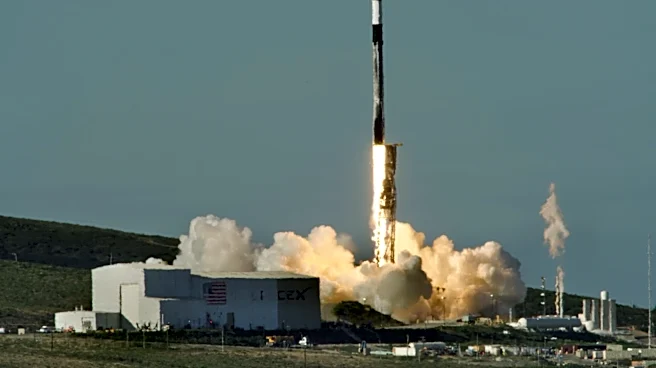
SpaceX successfully launched its Starship rocket, deploying 20 next-generation Starlink satellites into orbit. The launch, conducted from Starbase in Texas, marked the 13th test flight of the Starship, which aims to develop a fully reusable rocket system.
The mission included a successful satellite deployment and a planned landing in the Indian Ocean. However, the Super Heavy booster stage failed to complete its landing due to engine restart issues. Despite this, the mission gathered valuable data on the Starship's heat shield and satellite performance.
Why It's Important?
This successful launch is a critical step for SpaceX in achieving its goal of creating a fully reusable rocket system, which could significantly reduce the cost of space travel. The deployment of additional Starlink satellites enhances SpaceX's satellite internet network, potentially improving global internet access. The mission's success also supports NASA's Artemis III program, as Starship is slated to be the lunar lander for the mission. The data collected will aid in refining the vehicle's design, contributing to the advancement of U.S. space exploration capabilities.
What's Next?
SpaceX will likely continue testing and refining the Starship system to address the booster landing issues and further improve reusability. The company will analyze the data collected to enhance the design and performance of future missions. As SpaceX progresses, it will work towards meeting NASA's technical requirements for the Artemis III mission, which aims to return astronauts to the Moon. The success of these efforts could pave the way for more ambitious space exploration missions, including potential crewed missions to Mars.