





What's Happening?
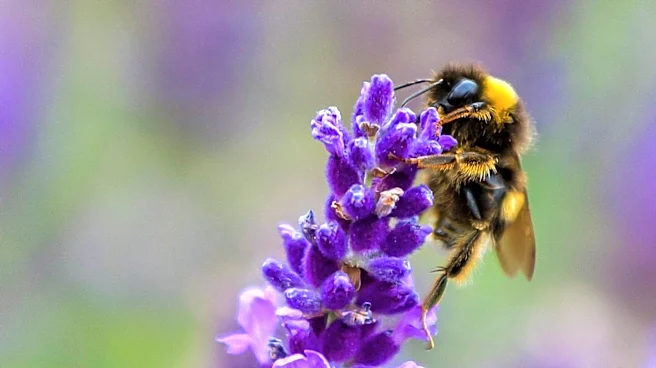
Recent research published in the journal Ecotoxicology and Environmental Safety has raised concerns about the pesticide sulfoxaflor, which is commonly used in agriculture. Despite being considered safe, the study indicates that sulfoxaflor may adversely
affect bumblebee reproduction. Funded by the U.S. Department of Agriculture, the research found significant changes in bumblebee ovarian tissue, suggesting that the pesticide could reduce the number of offspring produced. This finding is significant as it connects molecular changes in gene expression to real-world consequences for bees and their colonies. The study utilized RNA analysis and computational models to identify the biological systems most affected by pesticide exposure.
Why It's Important?
The implications of this study are significant for both agriculture and environmental conservation. Bumblebees are crucial pollinators, and their decline could have severe consequences for ecosystems and food supply chains. The research highlights the need for agricultural practices that protect crops while also safeguarding pollinator health. As pesticides like sulfoxaflor are essential for controlling crop pests, finding a balance that minimizes harm to non-target insects like bumblebees is critical. The study underscores the broader challenge of modern agriculture: managing pest control without causing collateral damage to beneficial species.
What's Next?
The study's findings may prompt further research into alternative pest management strategies that are less harmful to pollinators. Policymakers and agricultural stakeholders might consider revisiting regulations and guidelines for pesticide use to ensure environmental sustainability. Additionally, the research could inspire innovations in agricultural practices that prioritize both crop protection and pollinator health. Continued monitoring and evaluation of pesticide impacts on non-target species will be essential in developing effective and sustainable agricultural policies.