






What's Happening?
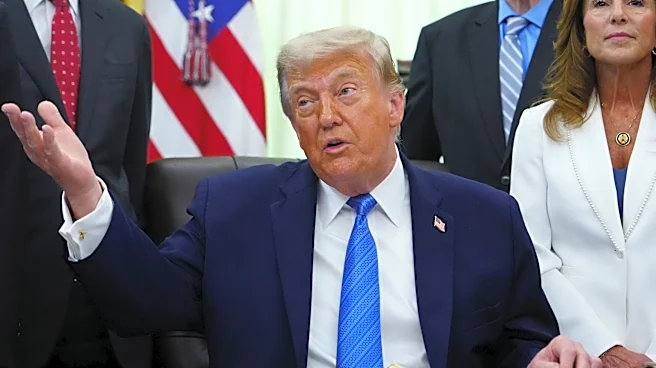
President Trump announced the cancellation of planned U.S. military strikes against Iran, citing a breakthrough in negotiations with Tehran and several regional governments. The discussions reportedly reached the highest levels of Iranian leadership and were
approved by multiple parties, including the United States, Israel, and several Gulf states. Despite the cancellation of the strikes, a naval blockade on Iran will remain until a final agreement is reached. However, Iran's semi-official Fars news agency reported that Tehran has not approved any initial memorandum of understanding with the U.S., casting doubt on the progress of the negotiations.
Why It's Important?
The decision to cancel the strikes marks a significant shift in U.S.-Iran relations, potentially averting immediate military escalation. This development could impact regional stability, as Gulf states like the UAE, which have suffered from Iranian attacks, are keen on reducing economic and security damage. The ongoing negotiations may lead to a diplomatic resolution, affecting global oil markets and regional alliances. However, the uncertainty surrounding Iran's approval of the agreement suggests that tensions could resurface if talks falter.
What's Next?
The continuation of the naval blockade indicates that the U.S. is maintaining pressure on Iran to finalize the agreement. The outcome of these negotiations could influence future U.S. foreign policy in the Middle East and affect relations with key allies like Israel and Saudi Arabia. The international community will be closely monitoring the situation, as any breakdown in talks could lead to renewed conflict.