





What's Happening?
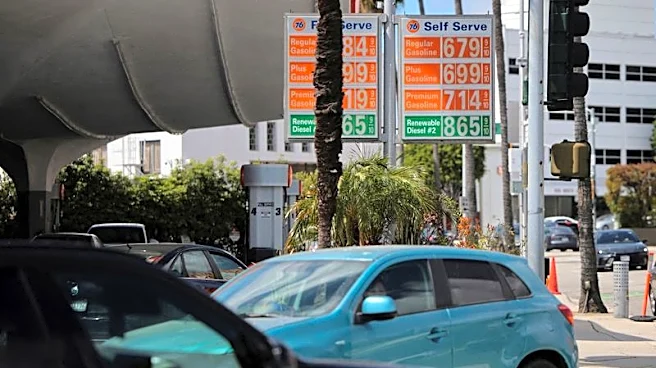
U.S. inflation has surged to 3.3 percent in March, marking the highest annual rate during President Trump's tenure. This increase is largely attributed to a significant rise in gasoline prices, which soared by 21.2 percent due to ongoing conflict in the Middle
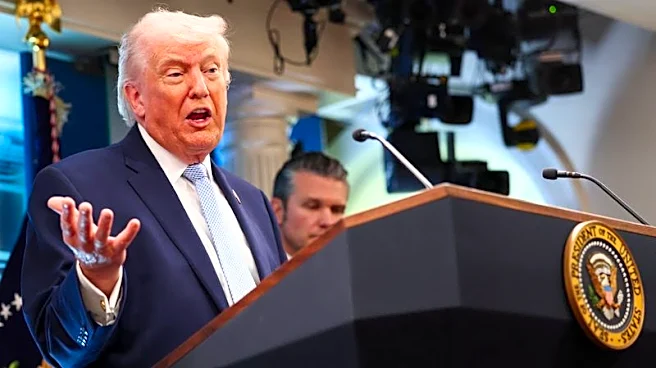
East. The Consumer Price Index rose by 0.9 percent from February, driven by disruptions in oil shipping through the Strait of Hormuz. The White House has acknowledged the volatility in gas and energy prices, while maintaining that other essential goods remain stable. The conflict with Iran has negatively impacted President Trump's approval ratings, which have reached new lows.
Why It's Important?
The inflation spike is a direct consequence of the U.S. conflict with Iran, affecting consumer prices and economic stability. The surge in energy costs, particularly gasoline, is a concern for American consumers and could further erode consumer confidence. With midterm elections approaching, President Trump faces pressure to address inflation and restore public trust in his economic policies. Persistently high inflation could impact his political standing, as economic concerns become a top issue for voters. Analysts warn that the supply disruptions may continue, affecting other parts of the economy.
What's Next?
Economists will closely monitor inflation pressures linked to energy prices in the coming months, as the future of the Iran conflict remains uncertain. The U.S. and Iran have agreed to a two-week ceasefire, but its fragility keeps markets volatile. President Trump must navigate these economic challenges to maintain political support, especially with midterm elections on the horizon. The administration's ability to manage inflation and stabilize energy prices will be crucial in shaping public perception and political outcomes.