








What's Happening?
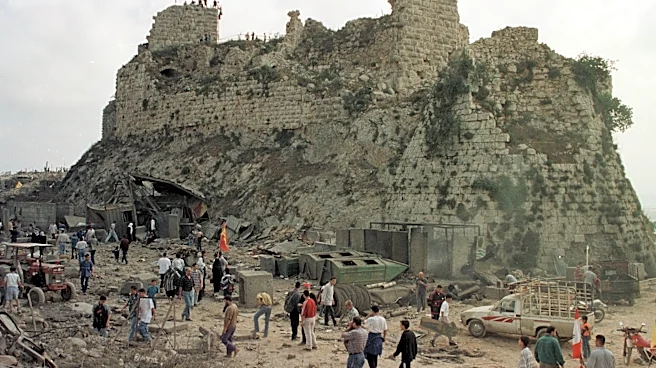
The Israel Defense Forces (IDF) have successfully retaken the Beaufort Ridge outpost in southern Lebanon, a strategic location that was previously held until May 2000. The withdrawal of Israeli forces from this area was ordered by former Prime Minister
Ehud Barak. The recent operation marks a significant military maneuver, with the IDF sharing footage of the first tank crossing the Litani River in southern Lebanon. This development underscores the ongoing military activities in the region, reflecting the complex geopolitical dynamics between Israel and Lebanon.
Why It's Important?
The retaking of the Beaufort Ridge outpost by the IDF is a critical development in the context of regional security and military strategy. This area has historically been a point of contention and strategic importance due to its location and the broader implications for Israeli-Lebanese relations. The move may influence future military and diplomatic interactions between the two countries, potentially affecting regional stability. It also highlights Israel's ongoing efforts to secure its borders and maintain a strategic advantage in the region, which could have implications for international diplomatic relations and security policies.
What's Next?
The retaking of the Beaufort Ridge outpost may lead to increased military presence and operations in southern Lebanon. This could prompt reactions from Lebanese political and military entities, potentially escalating tensions in the region. International stakeholders, including neighboring countries and global powers, may also respond to this development, considering its implications for regional security. Future diplomatic negotiations or military engagements could be influenced by this strategic move, shaping the geopolitical landscape in the Middle East.
Beyond the Headlines
The operation to retake the Beaufort Ridge outpost may have deeper implications for Israeli domestic politics and military policy. It could influence public opinion regarding military strategies and border security, potentially affecting political discourse and decision-making within Israel. Additionally, the move may impact Lebanon's internal dynamics, as it navigates its response to increased Israeli military activity. The broader cultural and historical context of the region, marked by past conflicts and ongoing tensions, adds layers of complexity to this development.