






What's Happening?
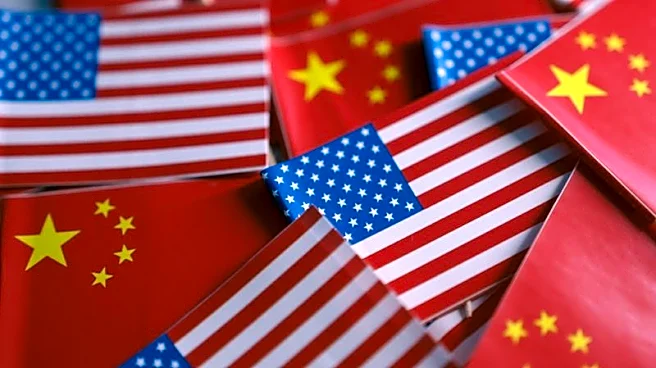
President Donald Trump is set to visit China for the first time since 2017, with Chinese President Xi Jinping ready to host him. The visit comes at a time when China has grown significantly in power and confidence on the global stage. Xi aims to project
China as a stable and reliable counterweight to U.S. volatility. The summit, delayed due to the war in Iran, seeks to stabilize the bilateral relationship amidst ongoing trade tensions and U.S. sanctions on Chinese firms. Xi's strategy involves showcasing China's strength and negotiating from a position of confidence, without making one-sided compromises.
Why It's Important?
This summit is pivotal for U.S.-China relations, as it occurs against a backdrop of heightened tensions and economic rivalry. China's approach reflects its growing assertiveness and willingness to challenge U.S. policies, particularly regarding trade and Taiwan. The meeting's outcome could influence global economic policies and impact international trade dynamics. For the U.S., understanding China's strategic intentions is crucial for future negotiations. The summit also highlights the shifting power dynamics, with China positioning itself as a peer to the U.S. in managing global affairs.
What's Next?
The summit is expected to result in limited concrete deliverables, with both leaders focusing on stabilizing relations rather than achieving immediate breakthroughs. Future meetings between Xi and Trump are anticipated, as both countries navigate their complex relationship. The ongoing war in Iran and its impact on U.S. military focus adds another layer of complexity to the negotiations. Observers will be watching for any shifts in U.S. policy towards Taiwan and potential concessions from China. The summit's success is important for both leaders, as they seek to maintain domestic support and manage international perceptions.