





What's Happening?
The United States is currently facing its most severe drought in nearly four years, impacting over 61% of the nation. This situation has led to significant water restrictions across various regions, prompting a reevaluation of traditional landscaping
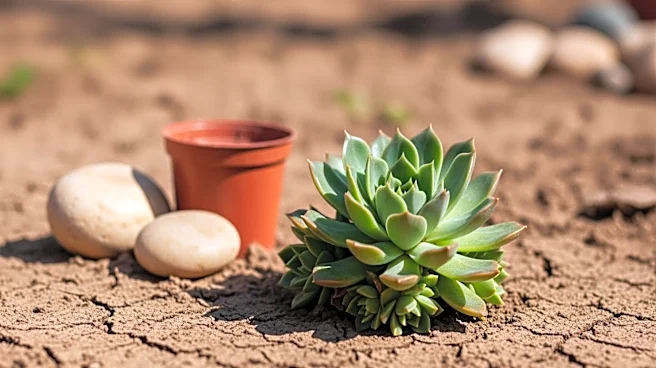
practices. Homeowners and professional gardeners are moving away from water-intensive lawns towards more sustainable and resilient landscaping solutions. This shift includes the adoption of drought-tolerant grasses, clover blends, and regionally adapted seed mixes that rely on natural rainfall. Additionally, xeriscaping, which involves using plants suited to local climates without extensive watering, is gaining popularity. This approach is evolving from a 'desert-style' aesthetic to a practical method that integrates green landscapes with water-wise plant choices.
Why It's Important?
The ongoing drought and resulting water restrictions are forcing a transformation in how Americans approach landscaping. Traditional lawns, which require consistent irrigation, are becoming unsustainable, leading to a nationwide shift towards more environmentally friendly practices. This change is crucial for conserving water resources and maintaining property values amidst limited water availability. By adopting drought-tolerant plants and xeriscaping techniques, homeowners can reduce water consumption and ensure their landscapes remain attractive and valuable. This movement not only addresses immediate water scarcity issues but also promotes long-term environmental sustainability.
What's Next?
As the drought persists, it is expected that more homeowners will continue to adopt sustainable landscaping practices. This trend may lead to increased demand for drought-resistant plants and landscaping services that specialize in xeriscaping. Additionally, local governments might implement further water restrictions, encouraging more widespread adoption of these practices. The landscaping industry could see a shift in focus towards educating consumers on sustainable options and developing new products that cater to water conservation needs.
Beyond the Headlines
The shift towards sustainable landscaping has broader implications for environmental conservation and climate change adaptation. By reducing water usage, these practices contribute to the preservation of vital water resources and help mitigate the effects of climate change. Moreover, the adoption of native and drought-tolerant plants can enhance biodiversity and support local ecosystems. This movement also reflects a growing awareness and responsibility among homeowners to make environmentally conscious choices that benefit both their properties and the planet.