






What's Happening?
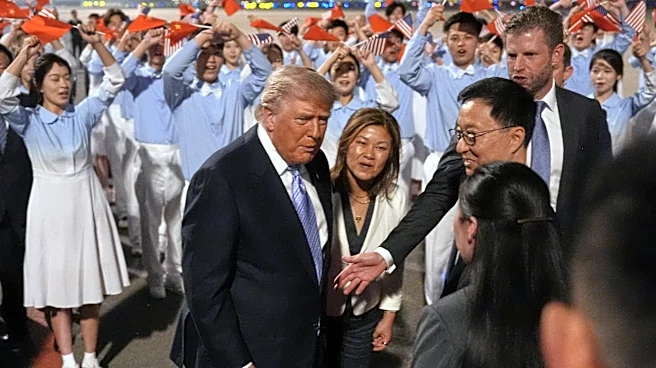
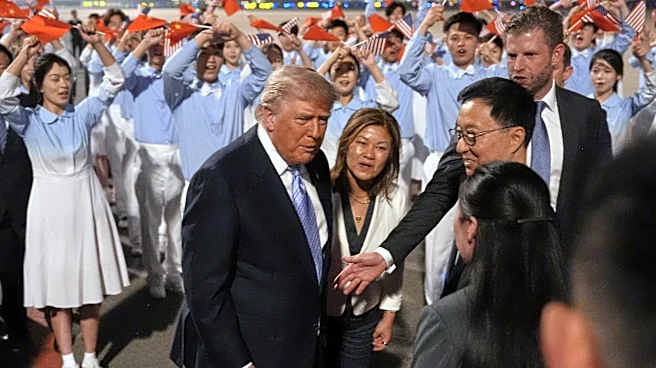
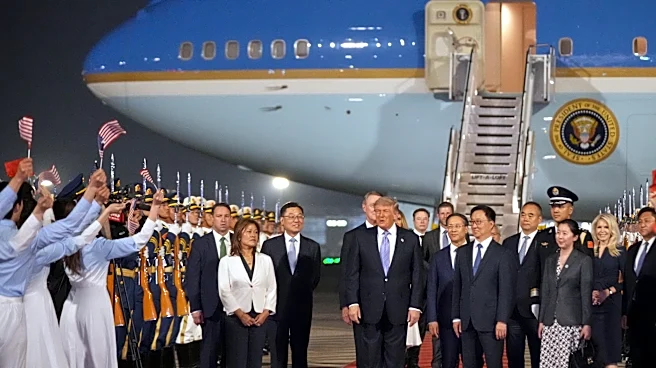
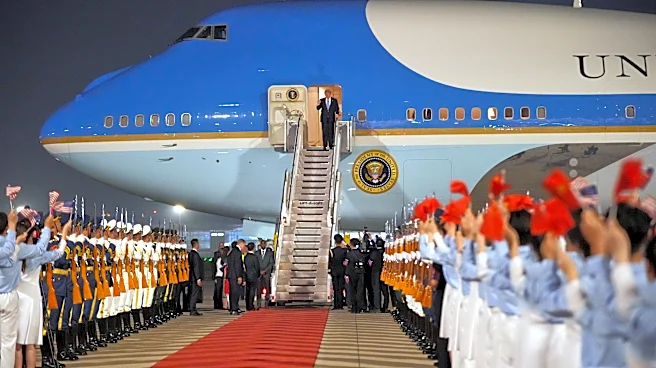
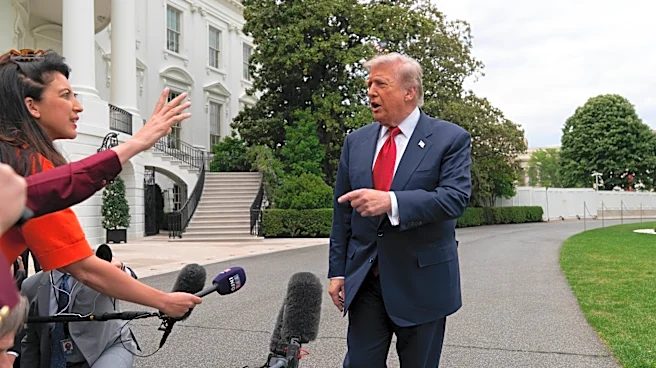
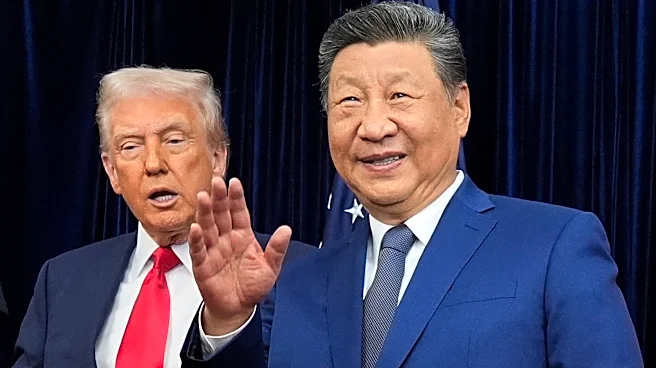
President Donald Trump has arrived in China for a summit with Chinese President Xi Jinping, accompanied by key members of his national security and economic team, as well as prominent U.S. business leaders. The visit, initially delayed due to ongoing
conflicts with Iran, aims to discuss trade deals and other bilateral issues. The U.S. blockade of the Strait of Hormuz, a critical route for Iranian oil, is expected to be a significant topic of discussion, with Trump likely to urge Xi to pressure Iran into reopening the strait and agreeing to a peace deal. The summit also comes amid concerns about China's stance on Taiwan.
Why It's Important?
The summit is crucial for U.S.-China relations, particularly in the context of trade and geopolitical tensions. The discussions could lead to new trade agreements that President Trump can present as achievements back home. However, the ongoing conflict with Iran and its implications for global oil supply add complexity to the negotiations. China's position as a major consumer of Iranian oil gives it significant leverage, which could influence the outcomes of the talks. The meeting also highlights the delicate balance of power between the U.S. and China, with potential implications for regional stability and international diplomacy.
What's Next?
The outcomes of the summit could shape future U.S.-China relations, particularly in trade and economic cooperation. Any agreements reached may impact global markets and influence U.S. domestic policy. The handling of the Iran situation will be closely watched, as it could affect global oil prices and international relations. Additionally, the discussions on Taiwan could have long-term implications for U.S.-China diplomatic ties and regional security dynamics.