






What's Happening?
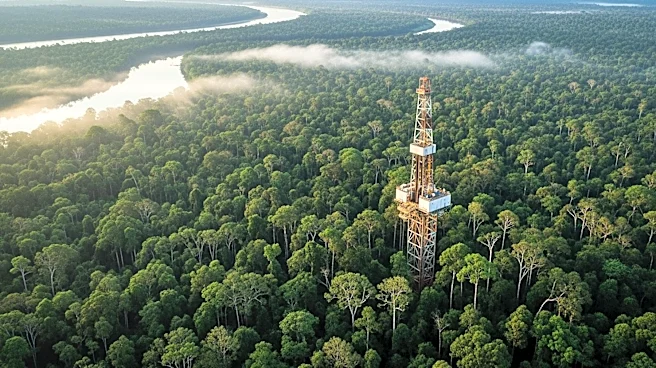
As Peruvians prepare to vote for a new president and Congress, the issue of illegal mining, a significant driver of deforestation and mercury pollution, remains largely unaddressed in political campaigns. Despite its status as the country's largest illicit
economy, generating over $11.5 billion in 2025, political parties have not prioritized tackling illegal mining. Environmental lawyer César Ipenza highlights the lack of understanding or possible complicity of political parties in this economy. Some candidates propose measures like gold traceability and protections for environmental defenders, but these are fragmented and insufficient. The Peruvian Institute of Economics reports that illegal mining rivals the formal sector and surpasses drug trafficking in economic impact.
Why It's Important?
Illegal mining poses severe environmental and public health risks, particularly in the Amazon and Indigenous territories. The lack of comprehensive political strategies to address this issue could exacerbate deforestation, mercury pollution, and the exploitation of Indigenous lands. The economic scale of illegal mining, surpassing even drug trafficking, underscores its significance as a national issue. The failure to address this problem could lead to long-term environmental degradation and health crises, affecting biodiversity and the livelihoods of Indigenous communities. The upcoming election presents a critical opportunity for political leaders to prioritize and implement effective measures against illegal mining.
What's Next?
The new government will face increasing pressure to address the illegal mining crisis. Effective strategies will require coordination across government agencies, including customs and financial intelligence units, to track gold flows and identify illegal activities. Strengthening legal frameworks and enforcement capabilities will be essential to combat organized crime networks involved in illegal mining. The international community and environmental organizations may also play a role in supporting Peru's efforts to tackle this issue. The outcome of the election could significantly influence the country's approach to environmental governance and the protection of Indigenous rights.