



What's Happening?
Glacier Bay National Park provides independent access to its tidewater glaciers, allowing visitors to experience the park without needing a large cruise ship. Travelers can fly Alaska Airlines seasonally from Juneau or take bush-commuter planes to Gustavus,
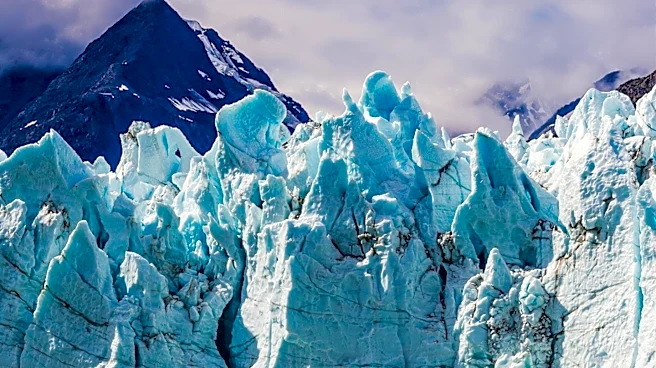
then stay at Glacier Bay Lodge in Bartlett Cove. From there, an authorized daily catamaran boat transports visitors 65 miles up the West Arm towards prominent tidewater glaciers like Margerie and Lamplugh. The National Park Service (NPS) strictly caps daily marine vessel entries into Glacier Bay to preserve its pristine environment. Booking an overnight stay in Gustavus and securing a seat on the concessionaire day-boat ensures close encounters with wildlife such as sea otters, Steller sea lions, and mountain goats, as well as views of calving glacier faces. Bartlett Cove also serves as the park headquarters, offering ranger-led evening talks and coastal rainforest walks.
Why It's Important?
The independent access model at Glacier Bay National Park is significant for several reasons. It democratizes access to a major natural wonder, allowing visitors to experience the park on their own terms rather than being confined to large cruise ship itineraries. This approach supports local businesses in Gustavus and Bartlett Cove, fostering a more sustainable tourism economy. The NPS's strict caps on daily marine vessel entries are crucial for environmental preservation, minimizing human impact on the delicate ecosystem and ensuring a more intimate wildlife viewing experience. This controlled access helps protect the park's unique biodiversity, including marine mammals and terrestrial wildlife, from over-tourism. Furthermore, the availability of ranger-led programs enhances the educational value of visits, deepening visitors' understanding of glacial processes and conservation efforts.
What's Next?
Future developments at Glacier Bay National Park will likely focus on maintaining the balance between visitor access and environmental protection. As the popularity of independent travel grows, the NPS may need to continually assess and adjust its vessel entry caps to manage demand while preserving the park's integrity. There could be further enhancements to visitor services at Bartlett Cove, such as expanded educational programs or improved infrastructure for independent travelers. Additionally, ongoing monitoring of the park's glaciers and wildlife populations will be essential to adapt management strategies in response to environmental changes, including climate change impacts on glacial retreat and marine ecosystems. Collaboration with local communities and indigenous groups may also play a larger role in shaping future park management and visitor experiences.
Beyond the Headlines
The operational model of Glacier Bay National Park, emphasizing controlled independent access, reflects a broader philosophical shift in conservation and tourism. It highlights a commitment to experiential travel that prioritizes immersion and minimal impact over mass tourism. This approach implicitly acknowledges the intrinsic value of wilderness and the need to protect it from excessive human disturbance. The park's success in managing visitor numbers while offering profound natural experiences could serve as a model for other protected areas facing similar pressures. Furthermore, the park's focus on education through ranger programs underscores the idea that understanding and appreciation are key to long-term conservation. This model encourages a more responsible form of tourism, where visitors become active participants in conservation rather than passive observers, fostering a deeper connection to the natural world and its preservation.