

What's Happening?
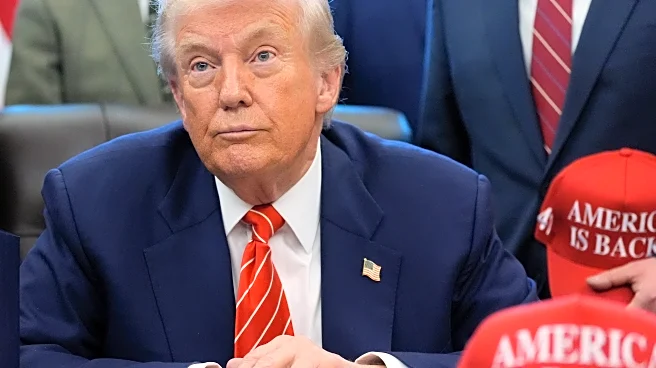
President Trump has expressed intentions to take action regarding Greenland, citing national security concerns. In a recent press conference, he stated that the U.S. might act on Greenland to prevent Russia or China from gaining influence over the territory.
Greenland, an autonomous region under Denmark, has been a point of interest for Trump, who has previously suggested acquiring it. This stance has met with opposition from Greenland, Denmark, and various European nations. The territory is rich in minerals and has a small population, making it strategically significant. Trump's comments come amid broader geopolitical tensions involving major powers like Russia and China, who are also seeking to expand their influence globally.
Why It's Important?
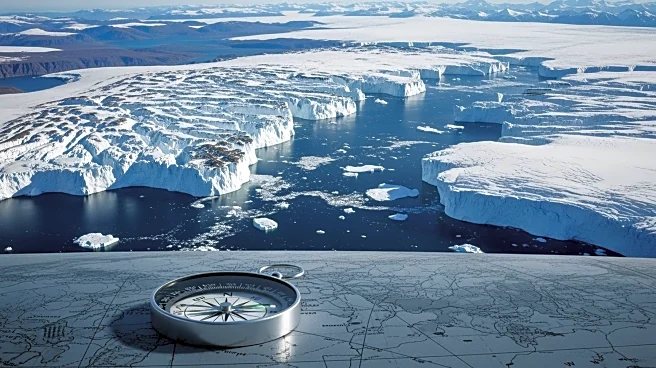
The potential U.S. action on Greenland underscores the strategic importance of the Arctic region, which is becoming increasingly significant due to its natural resources and geopolitical positioning. If the U.S. were to pursue control over Greenland, it could lead to heightened tensions with Denmark and other European allies, potentially straining diplomatic relations. Moreover, this move could provoke a response from Russia and China, who are also interested in expanding their influence in the Arctic. The situation highlights the complex interplay of national security, international diplomacy, and resource competition in global politics.
What's Next?
If President Trump decides to pursue action on Greenland, it could lead to diplomatic negotiations or conflicts with Denmark and other European nations. The U.S. may need to engage in discussions with international allies to address concerns and mitigate potential backlash. Additionally, any move towards acquiring Greenland could prompt reactions from Russia and China, who may seek to counterbalance U.S. influence in the region. The situation will require careful navigation to avoid escalating tensions and maintain international stability.
Beyond the Headlines
The interest in Greenland reflects broader trends in global politics where nations are increasingly focused on securing strategic territories rich in resources. This development could lead to a reevaluation of international laws and agreements governing territorial acquisitions and sovereignty. The situation also raises ethical questions about the rights of indigenous populations in Greenland and their role in decisions affecting their land. Long-term, this could influence global policies on territorial claims and resource management.