






What's Happening?
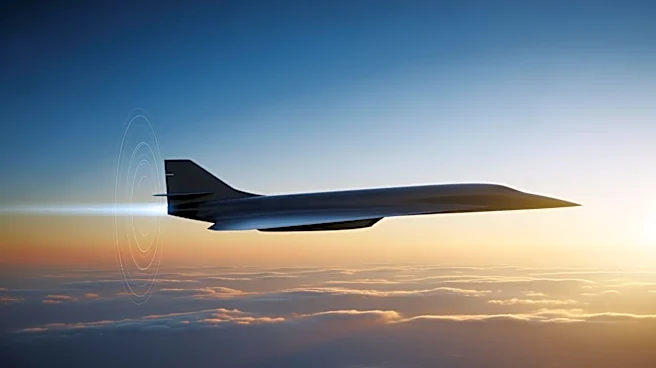
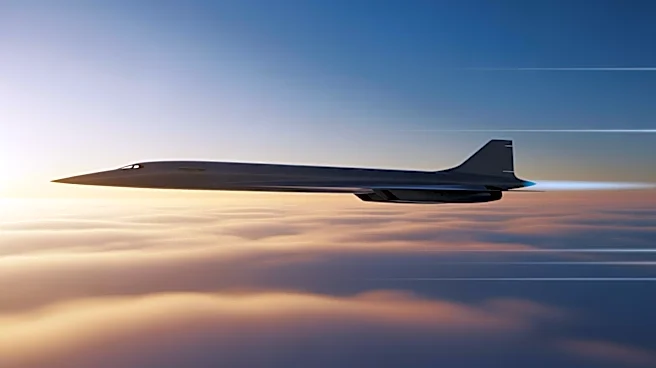
NASA's experimental X-59 aircraft successfully completed its first supersonic flight on June 5, 2026. The flight, which took place at Edwards Air Force Base in California, reached a speed of Mach 1.1, approximately 713 mph. This milestone is part of NASA's Quesst
mission, which aims to demonstrate the feasibility of quiet supersonic flight. The X-59 is designed to minimize the sonic boom typically associated with supersonic speeds, producing only a quiet thump. The flight lasted 81 minutes, with NASA test pilot Jim 'Clue' Less at the controls. The aircraft's performance met expectations, and the flight was monitored by a NASA F-15 chase plane.
Why It's Important?
The successful supersonic flight of the X-59 marks a significant step toward the potential for commercial supersonic travel over land. By reducing the noise impact of supersonic flight, NASA's Quesst mission could pave the way for faster air travel, reducing flight times and enhancing global connectivity. This advancement could have substantial implications for the aviation industry, potentially leading to new regulations and standards for supersonic travel. The ability to fly quietly at supersonic speeds could also open new markets and opportunities for airlines, benefiting both the industry and consumers.
What's Next?
Following this successful flight, the X-59 will undergo further testing to refine its quiet supersonic capabilities. Future tests will focus on the aircraft's sound profile, with plans to fly over several U.S. communities to gather data on noise levels. These tests aim to validate the aircraft's ability to fly at Mach 1.4 at an altitude of 55,000 feet while maintaining minimal noise impact. The data collected will be crucial for developing future regulations and standards for commercial supersonic flight.