



What's Happening?
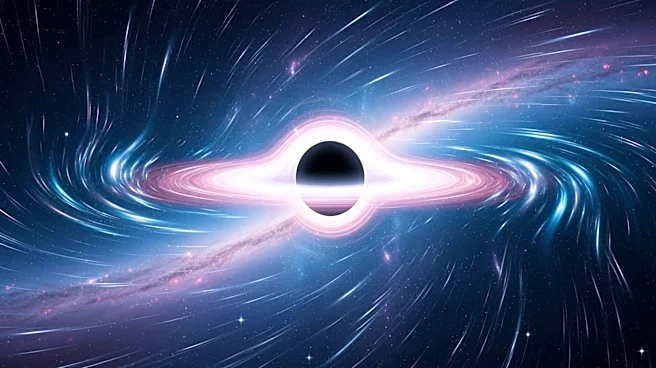
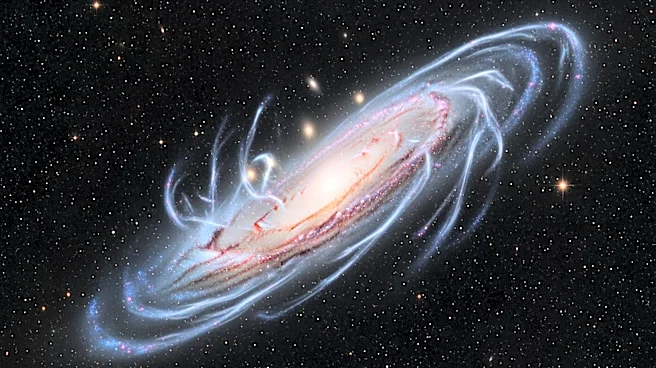
Recent research has highlighted the role of galaxy winds in the premature death of massive galaxies in the early universe. These winds, which are streams of fast-moving gas, can be generated by supermassive black holes or intense star formation. The James
Webb Space Telescope, along with the Atacama Large Millimeter Array, has provided new insights into these phenomena by observing hot, fast-moving gas being ejected from early massive galaxies. A particular galaxy, CRISTAL-02, was found to be ejecting gas at a rate that could lead to its death in less than 100 million years. This discovery challenges previous assumptions that only supermassive black holes could produce such powerful winds, suggesting that intense star formation can also drive these processes.
Why It's Important?
Understanding the mechanisms behind galaxy death is crucial for comprehending the evolution of the universe. The findings suggest that galaxy winds, whether from black holes or star formation, play a significant role in shaping the lifecycle of galaxies. This has implications for our understanding of galaxy formation and the conditions of the early universe. The research also highlights the capabilities of modern telescopes like the James Webb Space Telescope in uncovering previously undetectable phenomena, thereby advancing our knowledge of cosmic history.
What's Next?
Future research will likely focus on further exploring the conditions that lead to intense star formation and the subsequent generation of galaxy winds. Scientists may also investigate the frequency and impact of cosmic collisions, which appear to be a contributing factor to rapid star formation and galaxy death. Continued observations with advanced telescopes will be essential in refining our understanding of these processes and their implications for the evolution of the universe.
Beyond the Headlines
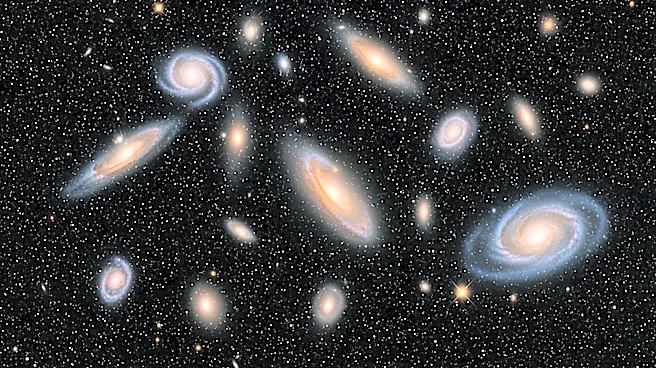
The study of galaxy winds not only enhances our understanding of cosmic evolution but also raises questions about the role of dark energy and other cosmic forces in shaping the universe. The findings suggest that the early universe was a dynamic environment where galaxies frequently collided and merged, leading to rapid changes in their structure and composition. This research could lead to a reevaluation of existing models of galaxy formation and the forces that govern the universe.