



What's Happening?
Former Republican Congresswoman Mayra Flores has asserted that the Latino vote is indispensable for the future of U.S. politics. Speaking on 'Esta Semana con Ilia Calderón,' Flores highlighted the growing influence of the Latino community in the United
States. She stated that Washington is actively working to address the needs and concerns of this demographic. Flores also pointed out that many Mexican-Americans hold conservative values, underscoring their significant role in shaping the country's electoral landscape. Her remarks emphasize the increasing recognition of Latino voters as a powerful and influential force in national elections and policy-making.
Why It's Important?
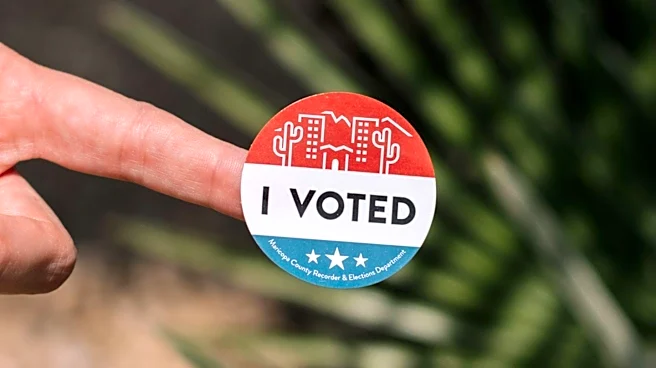
Mayra Flores's statement is important because it underscores a significant demographic shift and its impact on U.S. politics. The growing influence of the Latino vote means that both major political parties must increasingly tailor their platforms and outreach efforts to this community. For the Republican Party, acknowledging conservative values within the Mexican-American population, as Flores did, could be a strategy to expand its base. Conversely, the Democratic Party, which has historically enjoyed strong support from Latino voters, must work to maintain and strengthen those ties. This focus on the Latino vote highlights its potential to swing elections at local, state, and national levels, influencing policy decisions on immigration, economic issues, and social matters. The recognition of this voting bloc's power will likely lead to more targeted campaigns and increased representation efforts.
What's Next?
In the lead-up to future elections, it is expected that political parties and candidates will intensify their efforts to engage with and mobilize Latino voters. This will likely involve increased investment in Spanish-language media campaigns, community outreach programs, and the recruitment of Latino candidates. Mayra Flores's comments suggest a continued push by some Republicans to appeal to conservative-leaning Latino voters, potentially leading to shifts in traditional voting patterns. We may also see more debates and policy proposals specifically aimed at addressing issues relevant to the Latino community, such as immigration reform, economic opportunities, and educational access. The emphasis on the Latino vote will likely shape campaign strategies and political discourse in upcoming election cycles.
Beyond the Headlines
The increasing political prominence of the Latino vote, as highlighted by Mayra Flores, has deeper implications for American society and culture. It signifies a broader recognition of the diverse identities and perspectives within the U.S. population. This shift could lead to a more inclusive political dialogue, where issues important to Latino communities receive greater attention and consideration. Furthermore, it challenges existing stereotypes about political affiliations within ethnic groups, demonstrating that the Latino vote is not monolithic but encompasses a range of ideologies and priorities. This evolving political landscape could also foster greater civic engagement within Latino communities, leading to increased participation in all levels of government and a more representative democracy. The long-term impact could be a more nuanced understanding of American identity and a political system that better reflects its multicultural reality.