



What's Happening?
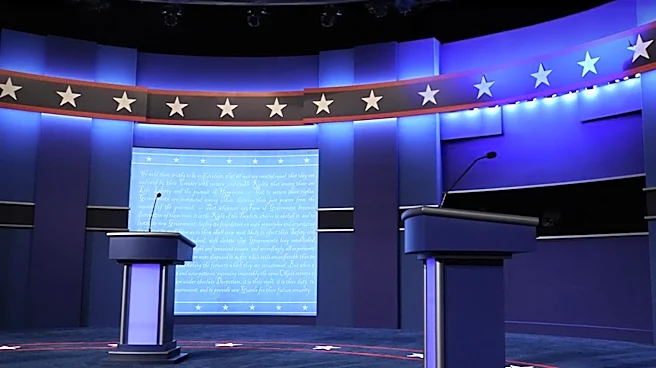
U.S. Rep. Josh Riley, a Democrat representing the 19th District, is facing criticism for reportedly declining a debate challenge from his Republican opponent, state Sen. Peter Oberacker. Oberacker, considered the underdog in the race, has publicly agreed
to debate. However, Riley's campaign has cited a 'jam-packed' schedule and a preference for focusing on other types of events as reasons for not accepting the debate. This situation mirrors a broader trend where front-runner candidates often avoid debates, a strategy that some political observers suggest is cynical, aiming to minimize risks of gaffes that could go viral and impact their campaign. The article contrasts Riley's stance with that of Congressman Paul Tonko, who is seeking his 10th term and has agreed to debate his underdog opponent, highlighting Tonko's willingness to prioritize voters' interests over a cautious reelection strategy.
Why It's Important?
The decision by a sitting Congressman to decline a debate challenge carries significant implications for democratic transparency and voter engagement. Debates are traditionally viewed as crucial platforms for candidates to articulate their policy positions, challenge their opponents' views, and allow voters to make informed decisions. When a front-runner avoids a debate, it can be perceived as an attempt to shield themselves from scrutiny, potentially undermining the democratic process. This practice can lead to a less informed electorate and reduce accountability for elected officials. For the 19th District race, Riley's refusal to debate Oberacker could deny constituents a direct comparison of their candidates' visions and qualifications, potentially impacting voter turnout and the overall perception of the election's fairness. It also raises questions about the role of debates in modern political campaigns and whether the perceived risks outweigh the benefits of public discourse.
What's Next?
The criticism surrounding Congressman Riley's decision to forgo a debate with state Sen. Peter Oberacker is likely to continue as the election approaches. Oberacker's campaign will likely leverage Riley's refusal to debate as a campaign point, portraying Riley as unwilling to face public scrutiny or engage directly with his opponent's arguments. This could intensify pressure on Riley to reconsider his stance or to find alternative ways to engage in direct, substantive policy discussions. Voters and media outlets in the 19th District will continue to seek opportunities for candidates to present their platforms and engage in dialogue. The outcome of this debate avoidance strategy will be closely watched, as it could influence future campaign tactics for both front-runners and underdogs in U.S. elections, potentially shaping how candidates choose to interact with the public and their opponents.
Beyond the Headlines
The reluctance of some front-runner candidates to engage in debates reflects a broader strategic shift in modern political campaigning, where risk aversion often trumps direct engagement. In an era dominated by social media and rapid news cycles, a single misstep in a debate can have disproportionate negative consequences, going viral and potentially derailing a campaign. This phenomenon raises ethical questions about the balance between strategic campaigning and the democratic ideal of robust public discourse. While campaigns aim to control narratives, the public's right to hear candidates directly challenge each other on policy and vision is fundamental to a healthy democracy. The trend of debate avoidance could lead to a more sanitized and less substantive political dialogue, potentially contributing to voter apathy and a decline in civic engagement, as opportunities for genuine policy comparison diminish.