



What's Happening?
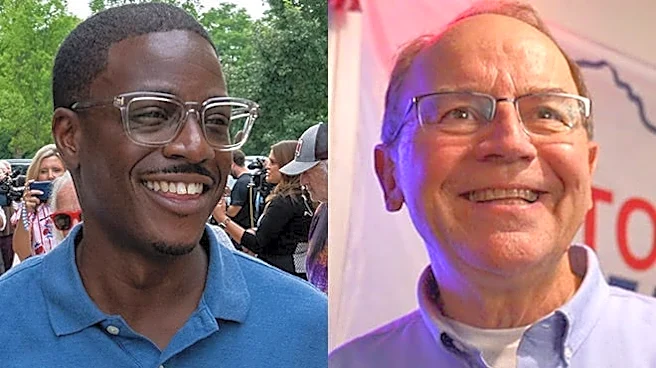
A recent Granite State Poll conducted by the University of New Hampshire Survey Center indicates that First District Congressman Chris Pappas, a Democrat, is still leading the race for his party's nomination for U.S. Senate. However, the poll reveals
that his support has slid, and challenger Karishma Manzur continues to close the gap. Manzur's gains are attributed to strong support from socialist and younger voters. The poll, conducted between August 20 and August 24, 2026, surveyed 2,143 New Hampshire residents online, including 893 likely 2026 Democratic state primary voters. On the Republican side, former Senator John E. Sununu maintains his lead over former Massachusetts Senator Scott Brown and is statistically tied with Pappas in a hypothetical general election matchup.
Why It's Important?
The UNH poll's findings are significant as they provide a real-time snapshot of the shifting dynamics in a crucial U.S. Senate primary race. The erosion of support for Chris Pappas, despite his lead, and the surge of Karishma Manzur, particularly among key demographic groups like younger and socialist voters, highlight potential vulnerabilities for established candidates. This trend could signal a broader appetite for change or more progressive policies within the Democratic electorate. For the general election, the poll's indication that John E. Sununu is statistically tied with Pappas suggests a highly competitive contest, emphasizing the importance of the primary outcome for both parties. The results will influence campaign strategies, resource allocation, and messaging as candidates prepare for the September 8 primary and the subsequent general election.
What's Next?
With the New Hampshire primary election approaching on September 8, the candidates will intensify their efforts to sway undecided voters and mobilize their bases. Chris Pappas will likely focus on consolidating his support and countering Manzur's momentum, while Manzur will aim to further narrow the gap and potentially overtake Pappas. The poll results will undoubtedly inform their campaign messaging and outreach strategies. Following the primary, the winning Democratic candidate will face the Republican nominee in what is projected to be a tight general election race. The performance of both Pappas and Manzur in the primary will be closely scrutinized for insights into the broader political landscape and voter sentiment in New Hampshire.
Beyond the Headlines
The UNH poll's detailed breakdown of voter support, particularly Manzur's strength among socialist and younger voters, offers a deeper insight into the evolving ideological landscape of the Democratic Party. This trend suggests a potential generational and ideological divide that could shape future elections. The ability of a lesser-known candidate like Manzur to gain significant traction against an incumbent Congressman underscores the power of grassroots movements and targeted appeals to specific voter segments. Furthermore, the statistical tie between Pappas and Sununu in a general election scenario highlights the swing-state nature of New Hampshire and the critical importance of candidate appeal and campaign effectiveness in securing victory. This race serves as a microcosm of the broader political battles playing out across the U.S., where traditional political structures are increasingly challenged by new voices and shifting voter priorities.