

What's Happening?
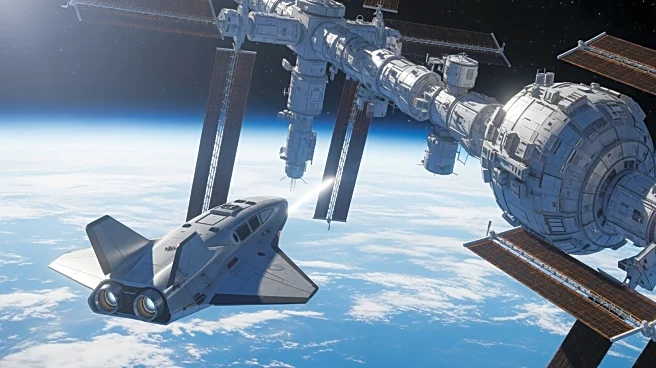
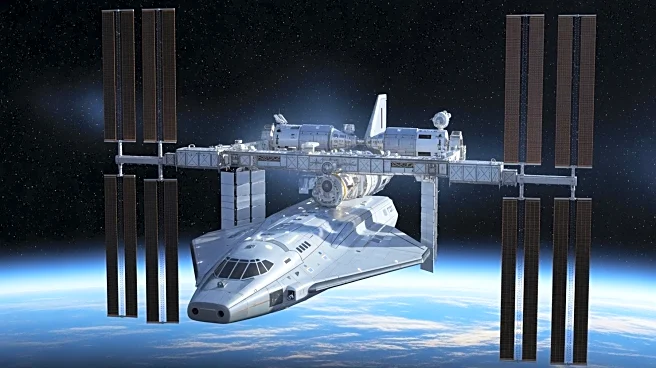
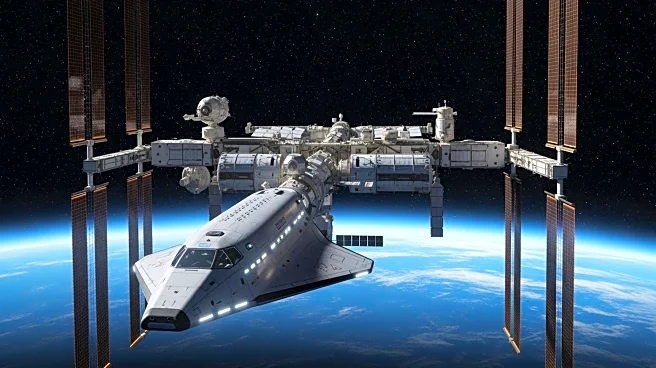
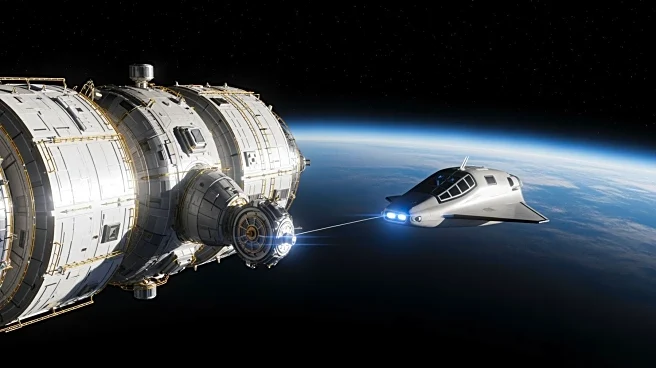
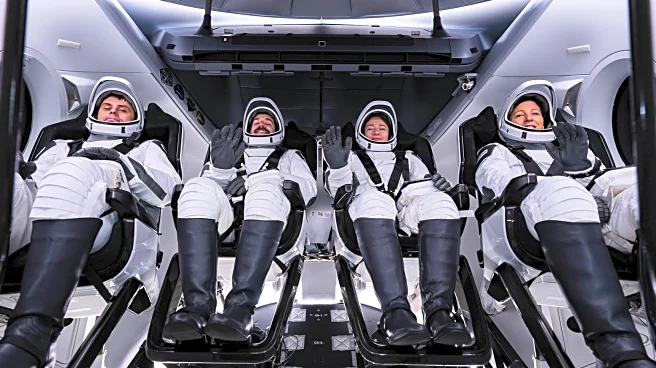
The International Space Station (ISS) has returned to full operational capacity with the arrival of four new astronauts. This follows a recent medical evacuation that marked NASA's first in 65 years of human spaceflight. The new crew, delivered by SpaceX,
includes NASA's Jessica Meir and Jack Hathaway, France's Sophie Adenot, and Russia's Andrei Fedyaev. They are set to replace the previous crew, which had to return to Earth prematurely due to a serious health issue affecting one of the astronauts. The new team will stay on the ISS for eight to nine months, resuming paused activities such as spacewalks and research. The previous crew's early departure left only three members on the station, necessitating the temporary halt of certain operations.
Why It's Important?
This development is significant as it underscores the challenges and risks associated with long-duration space missions. The medical evacuation highlights the importance of health monitoring and emergency preparedness in space travel. The arrival of the new crew ensures the continuation of critical research and maintenance activities on the ISS, which are vital for advancing scientific knowledge and supporting future missions. The international composition of the crew also reflects ongoing global collaboration in space exploration, which is crucial for sharing resources and expertise.
What's Next?
The new crew will focus on resuming and advancing scientific research and maintenance tasks that were paused due to the reduced crew size. Their mission will include conducting experiments that could have implications for future space travel and Earth-based applications. NASA will likely review and possibly enhance its medical protocols to prevent similar incidents in the future. The agency's handling of the situation may also influence policies and procedures for international space missions.