





What's Happening?
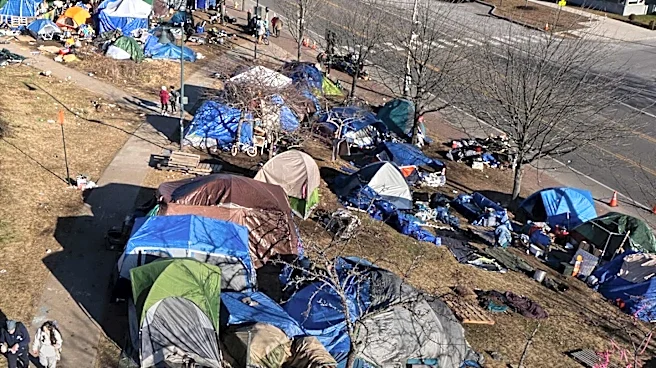
A new state report from the Legislative Finance Committee (LFC) reveals that New Mexico continues to struggle with housing affordability, uneven regional growth, and increasing homelessness, despite allocating over $524 million in recent state expenditures
to address these issues. The report, published on Tuesday, indicates that while approximately 62,000 housing units have been constructed in recent years, state-supported developments constitute only a small fraction of this increase. The LFC found that the Legislature often lacks clear metrics for success in the projects it funds. Although the state is generally exceeding the annual number of new housing units needed to address the housing shortage, these new developments are not always located in areas of greatest need and are frequently too expensive for extremely low-income residents. New Mexico's rate of homebuilding has also lagged behind national averages and neighboring states like Arizona and Texas.
Why It's Important?
This report highlights a critical challenge facing New Mexico: the persistent gap between housing supply and affordability, despite substantial financial investment. The finding that nearly half of all New Mexico renters are 'cost-burdened'—spending over 30% of their income on housing—underscores a significant economic strain on a large portion of the population. This situation can lead to increased homelessness, reduced disposable income, and broader economic instability. The uneven regional growth and the mismatch between new housing locations and actual demand suggest inefficiencies in current policy and resource allocation. For the state's economy and social well-being, addressing these issues effectively is paramount to ensure that all residents have access to safe, affordable housing, which is a fundamental component of a stable society and workforce.
What's Next?
The LFC report is expected to prompt further discussion and potential policy adjustments among New Mexico lawmakers. The presentation of the 'Las Cruces model,' which involves city officials partnering with nonprofit organizations to address housing and homelessness, offers a potential blueprint for other municipalities. This model, where nonprofits operate on city-owned land and may be exempt from rent if their services provide equivalent value, could be replicated to maximize impact and reduce public resource strain. Lawmakers, such as Sen. George Muñoz, have expressed interest in seeing similar public-private partnerships adopted in their districts. Future legislative sessions may focus on developing clearer success metrics for housing initiatives and exploring innovative local solutions to improve housing affordability and reduce homelessness across the state.
Beyond the Headlines
The struggles New Mexico faces with housing and homelessness, despite significant investment, point to deeper systemic issues beyond mere funding. The report implicitly questions the effectiveness of top-down legislative approaches without clear success indicators and highlights the importance of understanding local market dynamics. The 'Las Cruces model' exemplifies a shift towards community-centric, collaborative solutions that leverage the expertise of nonprofit organizations. This approach not only addresses immediate needs but also builds sustainable support systems. The disparity in housing construction rates compared to neighboring states suggests underlying economic or regulatory factors that may deter development. Addressing these challenges requires a comprehensive strategy that includes not only financial investment but also strategic planning, local engagement, and a re-evaluation of regulatory frameworks to foster more equitable and accessible housing markets.