





What's Happening?
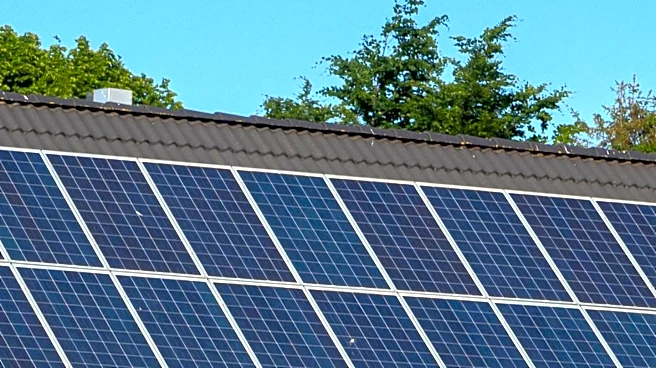
A homeowner installed solar panels flat on a garage roof to prevent animals from getting underneath and to avoid wind damage, but is now concerned about rainwater pooling on the panels. The homeowner sought advice on Reddit's r/SolarDIY forum, questioning
whether it is acceptable for water to sit on flat panels or if a slight tilt is necessary for drainage. The primary reason for the flat installation was to avoid drilling into the roof and causing leaks. Commenters on the forum largely advised angling the panels, emphasizing the need for proper anchoring to prevent them from being dislodged by wind and to ensure self-cleaning from water and bird droppings. Experts suggest an angle of at least 7 degrees for self-cleaning, with 15 degrees being ideal.
Why It's Important?
This situation highlights critical considerations for homeowners installing solar panels, particularly regarding installation methods and their impact on efficiency and longevity. Improper installation, such as laying panels flat, can lead to reduced energy production due to pooling water and accumulated debris, which obstructs sunlight. Furthermore, the lack of proper drainage can cause long-term damage to the panels and potentially the roof structure. The homeowner's concern about drilling into the roof points to a common apprehension that can deter individuals from adopting solar energy. Addressing these concerns with clear guidelines and reliable installation techniques is crucial for promoting widespread solar adoption and ensuring the effectiveness of renewable energy investments. The discussion also underscores the importance of community forums for sharing practical advice and best practices in DIY projects.
What's Next?
The homeowner will likely need to re-evaluate the current installation and consider angling the solar panels. This would involve securing them with appropriate anchoring systems that minimize the risk of roof leaks, as suggested by forum commenters. Manufacturers and solar installers could benefit from this feedback by developing more user-friendly and secure mounting solutions that address common homeowner concerns about roof integrity. Educational resources and guidelines for DIY solar installations should emphasize the importance of panel angle for optimal performance and maintenance. Continued community discussions and expert advice will be vital in guiding homeowners toward safe and efficient solar energy solutions.
Beyond the Headlines
This incident reflects a broader challenge in the adoption of renewable energy technologies: the gap between theoretical benefits and practical implementation. While solar energy offers significant environmental and economic advantages, the complexities of installation and maintenance can be daunting for individual homeowners. The fear of structural damage or reduced efficiency can act as a barrier to entry. This scenario underscores the need for robust consumer education, accessible professional guidance, and innovative product designs that simplify installation and mitigate perceived risks. Ultimately, fostering trust and confidence in solar technology requires not only technological advancements but also effective communication and support systems for end-users, ensuring that the transition to renewable energy is both practical and sustainable.