








What's Happening?
Ministers of Transport from nine Danube riparian countries, including Austria, Bulgaria, Croatia, Germany, Moldova, Romania, Serbia, Slovakia, and Ukraine, have renewed their commitment to the rehabilitation and maintenance of the Danube River and its
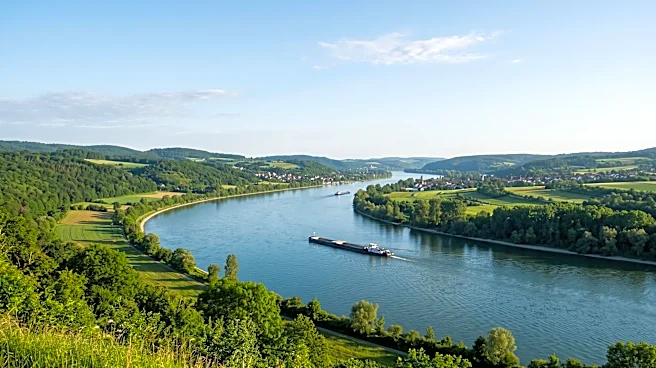
navigable tributaries. This commitment was formalized in adopted Ministerial Conclusions, emphasizing the critical role of the Danube in Europe's transport network and its resilience during crises. The ministers called for enhanced cooperation among waterway authorities, the navigation sector, and environmental stakeholders across the region. They highlighted the increasing need for reliable, resilient, and environmentally sustainable waterways, especially as hydrological conditions become more challenging due to extreme weather events like droughts and floods. The goal is to achieve Good Navigation Status on the Danube and its associated waterways within the TEN-T network by 2030, while ensuring compliance with environmental legislation and supporting the river's ecological functions. The Fairway Rehabilitation and Maintenance Master Plan, which has guided regional actions since 2014, was also underscored.
Why It's Important?
The renewed commitment to the Danube's waterways is crucial for maintaining a vital artery of European transport and trade. The Danube is a key component of the Rhine-Danube Core Network Corridor and has demonstrated its strategic value, particularly through the EU-Ukraine Solidarity Lanes. Effective rehabilitation and maintenance ensure the navigability of the river, which is essential for the movement of goods and people, thereby supporting economic competitiveness and regional connectivity. The emphasis on environmental sustainability alongside navigation highlights a balanced approach to infrastructure development, aiming to mitigate the ecological impact of transport activities. For the U.S., a stable and efficient European transport network indirectly supports global supply chains and economic stability, as disruptions in one major economic bloc can have ripple effects worldwide. Furthermore, the resilience of such infrastructure is increasingly important in the face of climate change, which poses significant challenges to traditional transport routes.
What's Next?
Following this renewed commitment, the focus will be on implementing the strategies outlined in the Ministerial Conclusions. This includes fostering closer cooperation among the various stakeholders and securing long-term investments for the necessary rehabilitation and maintenance projects. The ministers acknowledged that progress has been uneven, indicating a need for more proactive maintenance and flexible solutions, such as low-flow navigation channels and adaptable infrastructure. The goal of achieving Good Navigation Status by 2030 will require sustained effort and coordinated action from all participating countries. Future steps will likely involve detailed planning for specific projects, securing funding, and continuous monitoring of hydrological conditions to adapt maintenance strategies. The European Commission will likely play a coordinating role, leveraging its influence and resources to ensure the successful execution of these plans.
Beyond the Headlines
Beyond the immediate practicalities of transport and trade, this initiative reflects a broader understanding of infrastructure as a critical component of regional resilience and geopolitical stability. The inclusion of Ukraine and Moldova among the riparian countries underscores the strategic importance of the Danube in the context of current geopolitical dynamics, particularly in supporting countries with aspirations for closer ties with the European Union. The call for a balanced approach between navigation and environmental sustainability also highlights an evolving paradigm in infrastructure development, where ecological considerations are increasingly integrated into economic planning. This long-term vision for the Danube could serve as a model for other international waterways, demonstrating how coordinated action can address complex challenges related to climate change, economic development, and regional security.