



What's Happening?
Representative Michael McCaul, a leading Republican voice on foreign policy, has publicly disagreed with President Donald Trump's optimistic view of Russian President Vladimir Putin's intentions regarding the ongoing conflict in Ukraine. McCaul, who has been
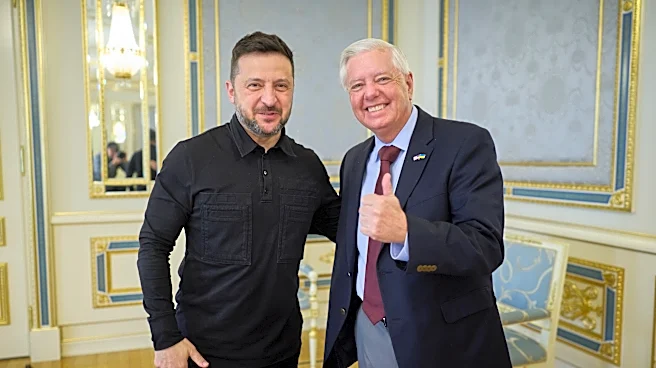
a staunch supporter of Ukraine, stated that Putin is the primary obstacle to achieving peace, contrary to Trump's belief that Putin is open to negotiations. McCaul's comments were made during an appearance on ABC News' This Week, following his recent visit to Ukraine where he met with Ukrainian President Volodymyr Zelensky. McCaul emphasized the need for continued U.S. military support for Ukraine and advocated for increased pressure on Russia through sanctions and military aid, including drone support and missile interceptors.
Why It's Important?
McCaul's statements highlight a significant division within the Republican Party regarding the U.S. approach to the Russia-Ukraine conflict. While President Trump has expressed confidence in his ability to negotiate with Putin, McCaul's remarks underscore skepticism about Putin's willingness to pursue peace. This divergence is crucial as it may influence U.S. foreign policy and military aid decisions. McCaul's position reflects a broader concern among some U.S. lawmakers about the implications of a Russian victory in Ukraine, which could embolden other adversaries. The debate also touches on the strategic importance of supporting Ukraine to deter Russian aggression and maintain international stability.
What's Next?
The disagreement between McCaul and Trump could lead to further discussions within the Republican Party and Congress about the U.S. strategy in Ukraine. McCaul's call for increased military support and sanctions against Russia may gain traction, especially in light of his influence as a senior member of the House Foreign Affairs Committee. Additionally, the recent death of Senator Lindsey Graham, a strong advocate for Ukraine, may prompt legislative efforts to pass tougher sanctions against Russia, as McCaul suggested. The outcome of these discussions could shape the U.S. response to the conflict and its diplomatic relations with Russia and Ukraine.