


What's Happening?
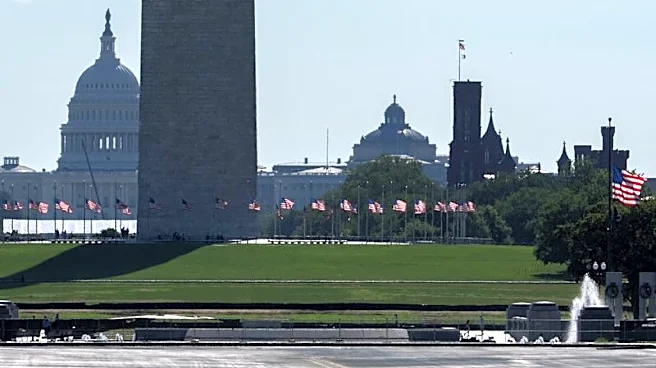
The National Guard deployment in Washington, D.C. has been extended until January 2029, with an estimated cost of $1.4 billion, according to a Defense Department estimate provided to Congress. This deployment, initiated by President Trump last summer,
was intended to address crime in the city. The presence of the National Guard has been a point of contention, with local officials criticizing it as an infringement on the city's autonomy and Democrats arguing it militarizes the streets at the public's expense. The deployment, which surged to about 5,000 troops during the 250th anniversary of the Declaration of Independence, is expected to maintain an average of 2,500 troops through 2029.
Why It's Important?
The extension of the National Guard's presence in Washington, D.C. has significant implications for federal spending and local governance. The $1.4 billion cost highlights the financial burden on taxpayers, raising concerns about the allocation of resources. Critics argue that the funds could be better spent on public services such as healthcare and education. Additionally, the deployment raises questions about the balance of power between federal and local authorities, as the presence of federal troops in the capital is seen by some as undermining local governance and autonomy.
What's Next?
The continuation of the National Guard deployment in Washington, D.C. is likely to remain a contentious issue. Local officials and residents may continue to push back against the federal presence, advocating for a reduction in troop numbers or a reevaluation of the deployment's necessity. The financial implications will also be scrutinized by lawmakers and the public, potentially influencing future budgetary decisions and policy discussions regarding federal intervention in local matters.