



What's Happening?
Utah state lawmakers are examining potential changes to laws governing data centers, driven by increasing concerns over their water consumption, especially during a prolonged drought. Jake Garfield, deputy director for the Utah Office of Energy Development,
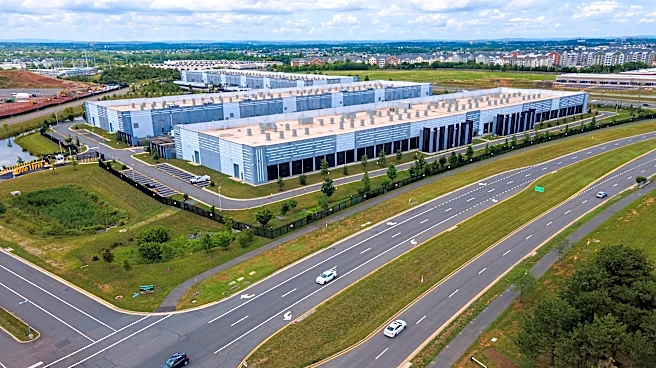
highlighted the Novva data center in West Jordan as a pioneer in using a closed-loop cooling system, a technology new to the U.S. when it opened in September 2021. This system significantly reduces water usage by recirculating water in a sealed loop, preventing evaporation and waste. Garfield noted that if Novva had used traditional evaporative cooling, it would have consumed up to 300 million gallons of water annually. Despite the existence of such water-saving technologies, there are currently no state policies mandating their use for data centers. Utah currently has 48 operational data centers, with more planned, and these facilities can consume thousands to millions of gallons of water daily. The lack of mandatory regulations means that new facilities are not required to adopt these more efficient systems, and existing traditional data centers are not compelled to switch.
Why It's Important?
The debate over data center regulations in Utah is significant due to the state's ongoing drought and the critical need for water conservation, particularly concerning the shrinking Great Salt Lake. The current lack of legislation enforcing water-saving technologies means that data centers, which are substantial water consumers, can continue to operate with less efficient cooling methods. This poses a direct threat to Utah's water resources and environmental sustainability. The issue has already impacted the political landscape, with data center projects being linked to a drop in job approval ratings for several statewide political leaders, including Governor Spencer Cox, and contributing to the primary loss of Utah state Senate President Stuart Adams. The situation in Utah reflects a broader national trend, as other states like New York and Pennsylvania have already implemented moratoriums or strict guidelines on data center construction, indicating a growing awareness of the environmental impact of these facilities. The ability of wealthy operators to bypass conservation efforts by purchasing existing water rights further exacerbates concerns about equitable resource distribution and environmental responsibility.
What's Next?
Utah lawmakers are expected to continue discussions on how to regulate the data center industry, potentially exploring legislation that would mandate the use of water-efficient cooling systems. The ongoing public scrutiny and political ramifications, including impacts on approval ratings and election outcomes, will likely pressure legislators to act. The success of pioneering technologies, such as Novva's closed-loop system and Valar Atomics' waterless reactors, could serve as models for future regulations, encouraging or requiring their adoption across the state. However, the challenge remains in balancing economic development, as data centers bring investment and jobs, with environmental protection. Stakeholders, including environmental groups, tech companies, and local communities, will likely continue to advocate for their respective interests, influencing the direction of future policy. The outcome of these legislative efforts will determine whether Utah can effectively mitigate the environmental footprint of its growing data center industry while maintaining its competitive edge in the tech sector.
Beyond the Headlines
The discussion surrounding data center water usage in Utah highlights a critical ethical and environmental dilemma facing rapidly developing technological sectors. While data centers are essential infrastructure for the digital age, their significant resource consumption, particularly water and energy, often goes unnoticed by the general public. The reliance on market forces to drive conservation, as noted by Jake Garfield, may not be sufficient to address urgent environmental challenges like drought. This situation raises questions about corporate responsibility and the role of government in regulating industries that have substantial environmental impacts. The fact that data centers have become a 'sleeper issue' in elections, as reported by the National Republican Senate Committee, indicates a growing public awareness and concern that could shift political priorities. This trend suggests a broader societal expectation for industries to adopt sustainable practices, even if it means increased operational costs or regulatory burdens. The long-term implications could include a re-evaluation of where data centers are located, favoring regions with abundant resources or those that can implement advanced, sustainable cooling technologies, potentially leading to a geographical redistribution of the tech industry.