






What's Happening?
NASA is accelerating its plans for a lunar base at the Moon's South Pole by awarding new contracts for rovers and cargo landers. These contracts are part of a series of missions aimed at building infrastructure, reducing landing risks, and preparing for future
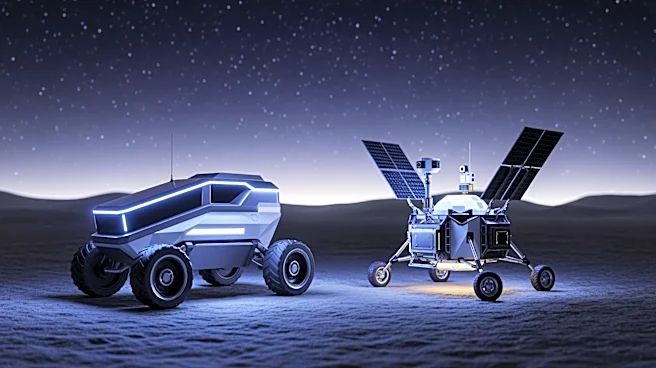
Artemis astronaut landings. The first mission, Moon Base I, is set to launch in fall 2026 using Blue Origin's Blue Moon Mark 1 Endurance lander. Two additional missions, Moon Base II and III, will follow, utilizing landers from Astrobotic and Intuitive Machines. NASA has also awarded contracts for lunar terrain vehicles to Astrolab and Lunar Outpost, supporting mobility by 2028.
Why It's Important?
The development of a lunar base is a critical step in NASA's Artemis program, which aims to establish a sustainable human presence on the Moon. These contracts signify a commitment to advancing lunar exploration and could pave the way for future missions to Mars and beyond. The involvement of commercial partners like Blue Origin and Astrobotic highlights the growing role of private companies in space exploration. This initiative could lead to technological advancements, economic opportunities, and international collaboration in space exploration, reinforcing the U.S.'s leadership in space.
What's Next?
As NASA progresses with its lunar base plans, the focus will be on executing the scheduled missions and ensuring the successful deployment of rovers and landers. The upcoming Moon Base I mission will be crucial in testing new technologies and gathering data for future crewed missions. NASA will continue to collaborate with international partners and commercial entities to enhance the capabilities of the Artemis program. The success of these missions could influence future space policy and funding, as well as inspire new generations of scientists and engineers.