

What's Happening?
A young Palestinian boy, Ata Mai, has drowned in severe flooding in Gaza, according to UNICEF. The floods have engulfed tent camps where many residents, displaced by years of conflict, are living. The boy's death is part of a broader humanitarian crisis
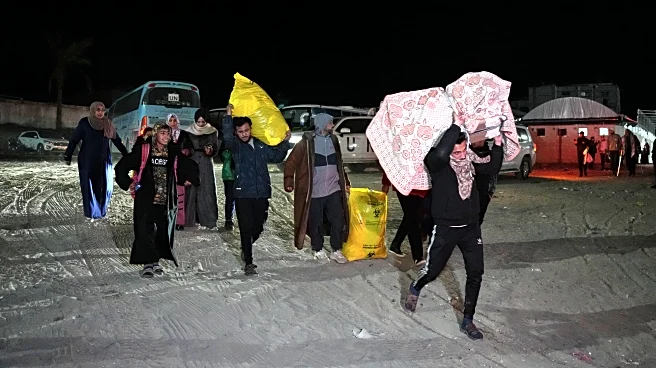
affecting the region, exacerbated by cold weather and storms. The Gaza Strip, home to over 2 million people, has seen significant destruction from past conflicts, leaving many without proper shelter. Videos have surfaced showing rescue workers attempting to retrieve the boy's body from muddy waters. The flooding has turned roads into mud and caused further damage to already compromised structures. UNICEF reports that at least six children have died from weather-related causes recently, highlighting the dire conditions in the area.
Why It's Important?
The situation in Gaza underscores the severe humanitarian challenges faced by its population, particularly children. The ongoing conflict and harsh weather conditions have compounded the difficulties for those living in tent camps, lacking adequate protection and resources. The international community's attention is crucial in addressing these issues, as the region continues to suffer from the aftermath of war and environmental hardships. The deaths of children due to weather-related causes highlight the urgent need for humanitarian aid and infrastructure support. The crisis in Gaza also reflects broader geopolitical tensions, with implications for regional stability and international relations.
What's Next?
The humanitarian crisis in Gaza is likely to persist without significant intervention. International organizations may increase efforts to provide aid and improve living conditions for displaced residents. The ongoing ceasefire between Israel and Hamas remains fragile, and any escalation could further exacerbate the situation. Humanitarian groups are expected to continue advocating for increased support and resources to address the immediate needs of the population. The international community may face pressure to engage more actively in peace negotiations and provide assistance to mitigate the impact of environmental and conflict-related challenges.
Beyond the Headlines
The flooding in Gaza highlights the intersection of environmental and political issues in conflict zones. The lack of infrastructure and resources to withstand natural disasters is a critical concern for displaced populations. The situation raises ethical questions about the responsibility of the international community to protect vulnerable groups in conflict areas. Long-term solutions require addressing both the political roots of the conflict and the environmental vulnerabilities that exacerbate humanitarian crises. The plight of children in Gaza serves as a stark reminder of the human cost of prolonged conflict and the need for comprehensive peace and development strategies.