







What's Happening?
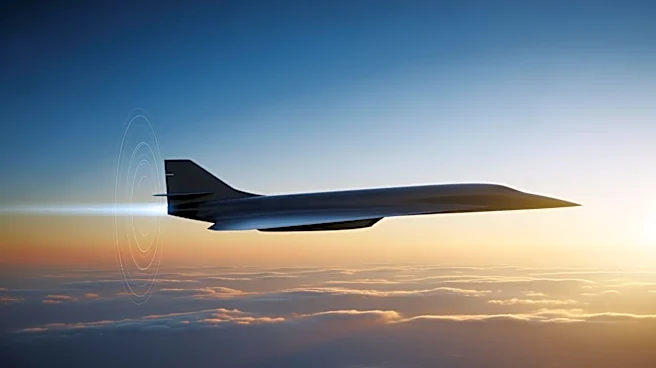
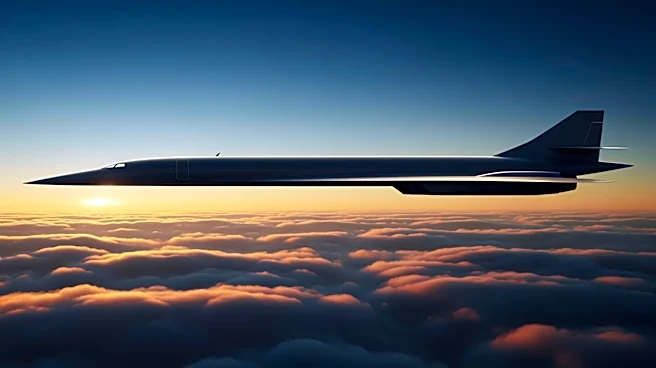
NASA's X-59 quiet supersonic research aircraft successfully completed its first supersonic flight on June 5, 2026, as part of the Quesst mission. The aircraft reached a speed of Mach 1.1, approximately 713 mph, at an altitude of 43,400 feet. This milestone
marks a significant step in the aircraft's flight testing, as it expands into the supersonic portion of its flight envelope. The X-59 is designed to fly at supersonic speeds while producing only a quiet thump instead of a loud sonic boom. The flight was monitored by a NASA F-15 chase plane, which ensured the test proceeded smoothly.
Why It's Important?
The successful supersonic flight of the X-59 is crucial for NASA's Quesst mission, which aims to demonstrate the feasibility of quieter supersonic flight. This technology has the potential to revolutionize commercial aviation by enabling supersonic travel over land without the disruptive noise of traditional sonic booms. If successful, it could lead to faster air travel and open new markets for supersonic passenger flights. The data collected from these tests will inform future regulations and standards for supersonic flight, potentially paving the way for commercial applications.
What's Next?
Following the successful supersonic flight, the next phase for the X-59 involves mission conditions flights. These tests will involve flying over several U.S. communities to gather data on the aircraft's noise levels from the ground. The goal is to validate the X-59's ability to minimize noise impact, which is critical for gaining regulatory approval for commercial supersonic flights. NASA will continue to refine the aircraft's design and conduct further tests to ensure it meets all safety and performance standards.