





What's Happening?
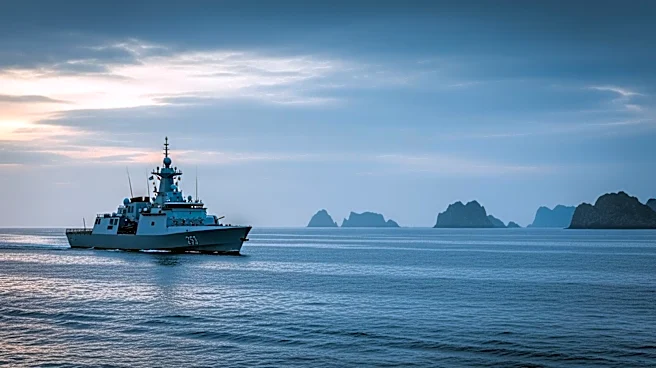
The European Union has imposed sanctions on Iran's Islamic Revolutionary Guard Corps (IRGC) and other entities, citing restrictions on navigation through the Strait of Hormuz. The sanctions target individuals and entities involved in actions that threaten
freedom of navigation, which the EU claims are contrary to international law. The Hormozgan Provincial Command of the IRGC Navy is specifically mentioned for implementing a toll system requiring vessels to provide documentation and pay fees for passage. This move aligns with the EU's broader strategy to ensure maritime security and uphold international navigation rights.
Why It's Important?
The sanctions underscore the EU's commitment to maintaining open and secure international waterways, which are vital for global trade. The Strait of Hormuz is a critical chokepoint for oil transportation, and any restrictions can have significant implications for global energy markets. By targeting the IRGC, the EU aims to pressure Iran to comply with international norms, potentially affecting Iran's economy and its geopolitical stance. The sanctions also reflect the EU's alignment with U.S. policies, as both entities seek to counter Iran's influence in the region.
What's Next?
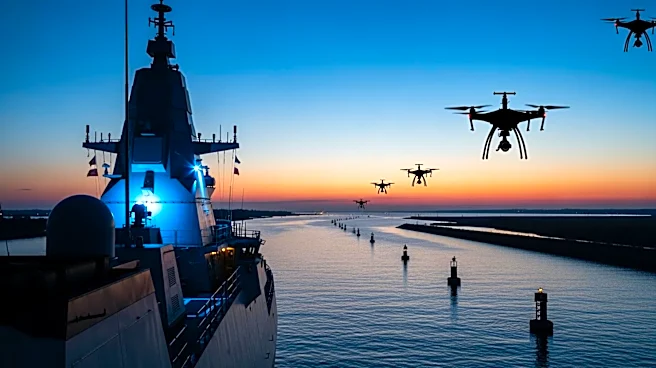
The EU's actions may lead to increased tensions between Iran and Western nations, potentially impacting ongoing diplomatic efforts to stabilize the region. The formation of a European-led mine clearance force in the Strait of Hormuz is anticipated, contingent on progress in U.S.-Iran talks. This development could lead to further international collaboration or conflict, depending on Iran's response to the sanctions and any subsequent military or diplomatic actions by the EU and its allies.