




What's Happening?
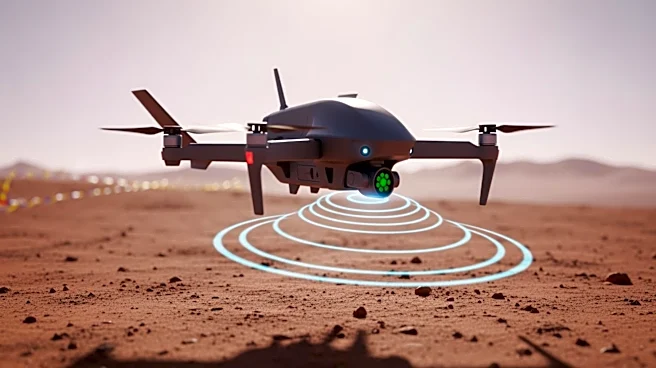
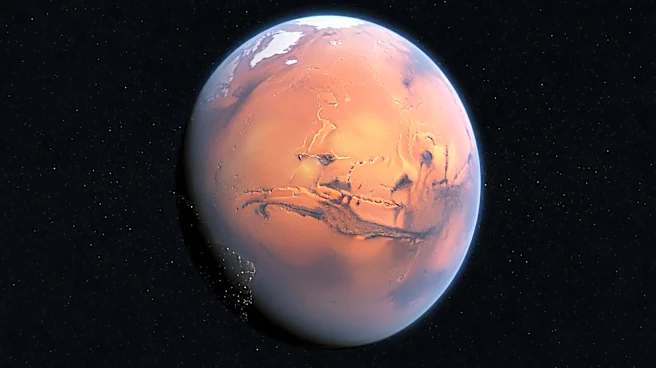
Scientists from the University of Arizona propose using drone-mounted radar to locate water on Mars more accurately. This technology, which has been effective in mapping glaciers on Earth, could help identify drilling sites on Mars by detecting ice beneath
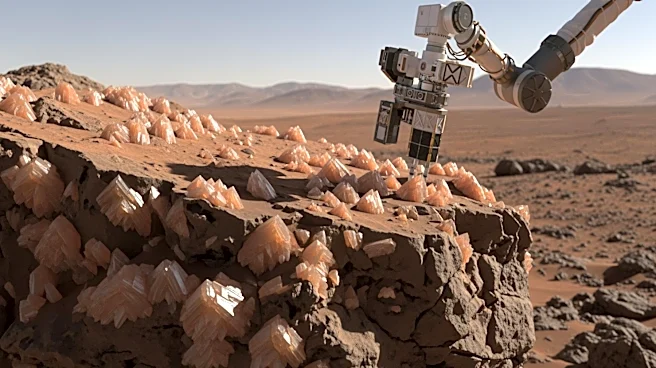
the surface. The study suggests that drones equipped with ground-penetrating radar could provide detailed information about the thickness of debris covering Martian ice, aiding in the selection of drilling locations. This method offers a more precise alternative to current techniques used by orbiting spacecraft.
Why It's Important?
The development of drone-mounted radar technology for Mars exploration could significantly enhance the search for water, a critical resource for future manned missions. Accurate detection of subsurface ice is essential for planning sustainable human presence on Mars, as it could provide water for drinking, agriculture, and fuel production. This advancement could also lead to new insights into the planet's geological history and climate. The successful application of this technology on Mars could pave the way for its use in other planetary explorations.