
What's Happening?
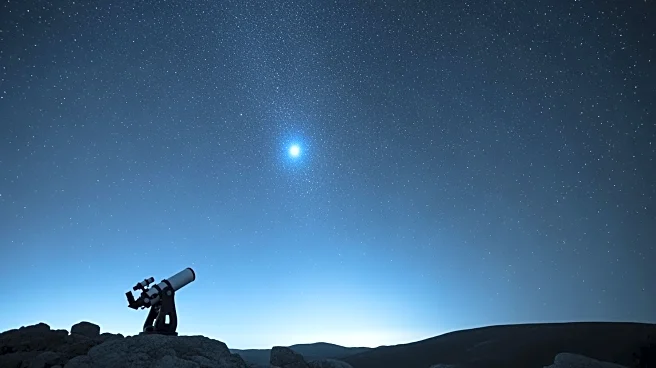
On January 8, astronomy enthusiasts have the opportunity to observe the Perseus Cluster of galaxies, with NGC 1275 being the brightest member. The event is facilitated by a favorable dark-sky window, as the Moon
remains below the horizon until nearly midnight. This allows for the observation of fainter celestial objects in the eastern constellation Perseus. NGC 1275, also known as Perseus A, is a peculiar galaxy characterized by strong radio and X-ray emissions, indicating an active supermassive black hole. The cluster includes other observable galaxies, such as NGC 1272, especially with larger telescopes.
Why It's Important?
The observation of the Perseus Cluster offers valuable insights into the dynamics of galaxy clusters and the behavior of supermassive black holes. For amateur astronomers and researchers, such events provide an opportunity to study celestial phenomena and contribute to the understanding of cosmic structures. The event also highlights the importance of dark-sky preservation, as light pollution can hinder astronomical observations. Engaging the public in such events can foster interest in astronomy and science, encouraging educational pursuits and awareness of the universe.