








What's Happening?
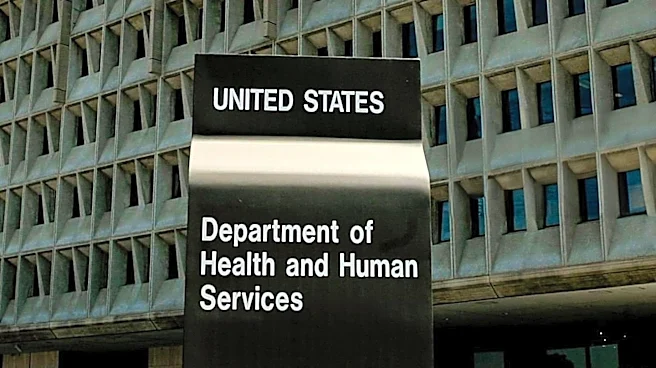
The U.S. Department of Justice (DOJ) and the U.S. Department of Health and Human Services (HHS) have jointly launched a new pilot program designed to encourage health care entities to self-disclose violations of the False Claims Act (FCA). Under this
program, health care providers who voluntarily report issues may be eligible to pay less than half of the substantial fines typically associated with FCA violations. The FCA is a federal law that imposes liability on persons and companies who defraud governmental programs. While the FCA is enforced government-wide, health care has historically been a primary focus area for enforcement due to strict rules governing claims submitted to federal health programs like Medicare and Medicaid. Violators of the FCA can face treble damages plus significant penalties.
Why It's Important?
This pilot program represents a significant shift in enforcement strategy, aiming to incentivize transparency and compliance within the health care industry. By offering reduced penalties for self-disclosure, the DOJ and HHS hope to encourage health care entities to proactively identify and report fraudulent activities, rather than waiting for government investigations. This could lead to a more efficient recovery of taxpayer funds and a reduction in health care fraud, which costs billions of dollars annually. For health care providers, the program offers a potential pathway to mitigate financial and reputational risks associated with FCA violations. It also underscores the government's commitment to combating fraud while providing a mechanism for entities to rectify past mistakes with less severe consequences, potentially fostering a culture of greater accountability and ethical conduct in the industry.
What's Next?
Health care entities will now have the opportunity to evaluate their compliance programs and consider participating in this self-disclosure pilot program. The success of the program will likely depend on the level of participation from the health care industry and the effectiveness of the reduced penalty structure in encouraging disclosures. The DOJ and HHS will monitor the program's outcomes to assess its impact on fraud detection and recovery. If successful, the pilot program could be expanded or become a permanent feature of FCA enforcement. Conversely, if participation is low or if the program does not yield significant results, the agencies may re-evaluate their approach. This initiative could also prompt health care organizations to invest more in robust internal compliance systems to identify potential violations early.
Beyond the Headlines
The pilot program highlights a broader trend in regulatory enforcement towards encouraging voluntary compliance through incentives, rather than solely relying on punitive measures. This approach acknowledges the complexity of regulatory environments, particularly in the health care sector, where errors or non-compliance can occur despite good intentions. Ethically, the program encourages a proactive stance on corporate responsibility, urging entities to 'do the right thing' by reporting issues. However, it also raises questions about the balance between leniency and deterrence, and whether reduced penalties might inadvertently signal a softer stance on fraud. The program's long-term success will depend on its ability to strike this balance, ensuring that it effectively combats fraud while promoting a fair and transparent regulatory environment for the health care industry.