




What's Happening?
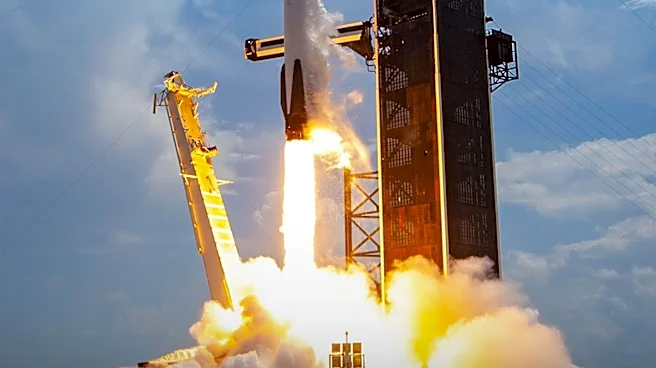
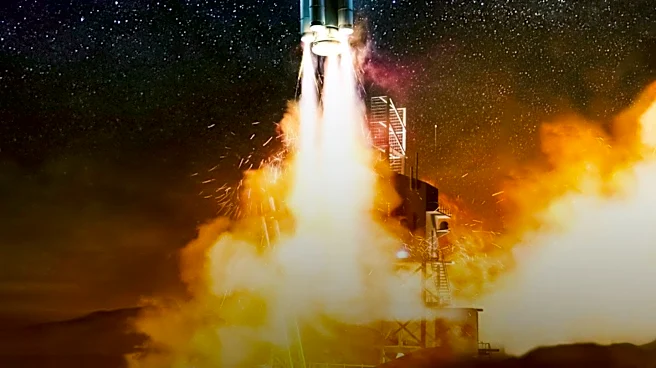
China's commercial rocket company, LandSpace, has successfully recovered a stainless-steel booster after an orbital launch, marking a global first. The Zhuque-3 rocket, powered by liquid methane and oxygen, lifted off from the Jiuquan Satellite Launch
Centre and delivered a Honghu-3 internet satellite into orbit. Its first stage then returned to Earth, executing a vertical touchdown at a recovery site in Minqin county, Gansu province. This achievement makes the Zhuque-3 China’s first commercial rocket to both reach orbit and have its first stage recovered. This success positions LandSpace as the fourth entity globally, after SpaceX, Blue Origin, and the state-owned China Aerospace Science and Technology Corporation, to recover a launch vehicle, and the first to do so with a stainless-steel booster, a material choice that can offer cost advantages over traditional aluminum alloys.
Why It's Important?
This development is highly significant for the global space industry and has implications for U.S. space competitiveness. By successfully recovering a stainless-steel booster, LandSpace has demonstrated a viable alternative to the aluminum alloy boosters predominantly used by U.S. companies like SpaceX. Stainless steel can be more cost-effective to produce and potentially more durable for reuse, which could drive down the overall cost of space launches. This achievement intensifies the competition in the reusable rocket market, pushing U.S. companies to innovate further in materials science, manufacturing processes, and recovery techniques to maintain their edge. Lower launch costs could democratize access to space, benefiting industries reliant on satellite technology, such as telecommunications, Earth observation, and navigation. For the U.S., this means a heightened need for continued investment in its own commercial space sector to ensure it remains at the forefront of space technology and exploration, particularly as China demonstrates rapid advancements in this critical area.
What's Next?
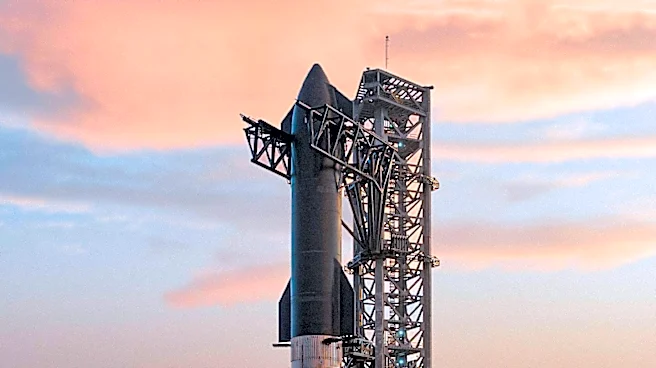
LandSpace's successful recovery of the Zhuque-3's stainless-steel booster is expected to accelerate China's efforts in developing lower-cost, reusable rockets. This success will likely lead to further testing and refinement of the Zhuque-3 system, with an aim to increase the frequency and reliability of its reusable launches. The use of stainless steel could become a more prominent feature in future rocket designs, potentially influencing material choices across the global space industry. For the U.S., this development will likely spur increased investment and research into alternative materials and recovery methods for its own reusable launch vehicles. SpaceX's Super Heavy booster, also made of stainless steel, is awaiting FAA approval for its first recovery flight, indicating that U.S. companies are also exploring this material. The coming years will likely see a more intense race to achieve cost-effective and frequent space access, with both nations pushing the boundaries of rocket technology and reusability.
Beyond the Headlines
The successful recovery of a stainless-steel booster by LandSpace carries deeper implications for the geopolitical landscape and technological leadership. This achievement underscores China's strategic commitment to becoming a dominant force in space, not just through state-backed programs but also through its burgeoning commercial space sector. The choice of stainless steel, while offering cost benefits, also highlights a potential divergence in engineering philosophies compared to the U.S.-led approach, which has historically favored lighter, more expensive materials. This could lead to different pathways for technological evolution in rocketry, with each approach having its own advantages and disadvantages in terms of manufacturing, reusability, and performance. Furthermore, the ability to achieve lower-cost space access could have significant military and strategic implications, enabling more frequent deployment of surveillance, communication, and potentially weaponized satellites. This technological leap by China will undoubtedly influence U.S. defense and space policy, prompting a re-evaluation of its own strategies to maintain a competitive edge in the rapidly evolving domain of space.