
What's Happening?
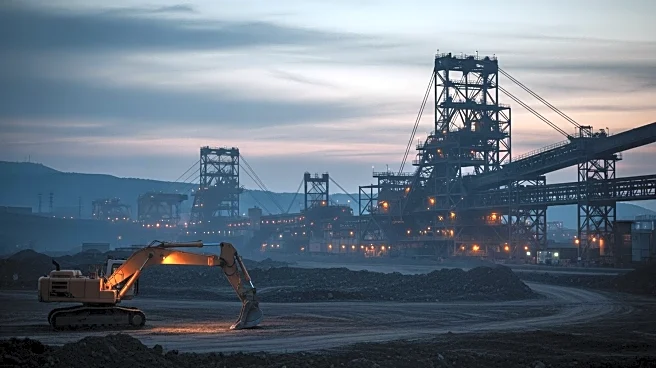
The Simandou mega mining project in Guinea, which recently began exporting iron ore, is experiencing mass layoffs as it transitions from construction to operational phases. The project, managed by consortia
including Rio Tinto and the Winning Consortium Simandou, initially employed over 60,000 workers. However, as construction nears completion, the workforce is being reduced to fewer than 15,000. This reduction comes despite the project's potential to significantly boost Guinea's GDP. The layoffs have raised concerns about social unrest and economic inequality, particularly in rural areas where alternative employment opportunities are scarce.
Why It's Important?
The Simandou project is crucial for Guinea's economic development, promising to increase the country's GDP by 26% by 2030. However, the mass layoffs highlight the challenges of translating large-scale industrial projects into broad-based economic benefits. The reduction in workforce could exacerbate poverty and inequality, particularly in rural regions. The situation underscores the need for policies that ensure the mining sector's growth translates into sustainable economic development and improved living standards for the broader population.
What's Next?
The Guinean government has announced plans for new infrastructure projects to mitigate the impact of job losses. These include roads, refineries, and power plants, although specific timelines have not been provided. The government is also working on a long-term strategy, 'Simandou 2040', to diversify the economy and create jobs across various sectors. The success of these initiatives will be critical in addressing the socio-economic challenges posed by the layoffs and ensuring that the benefits of the Simandou project are widely shared.