







What's Happening?
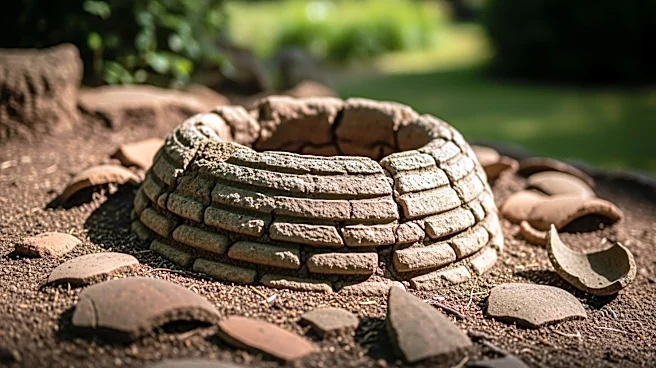
Archaeologists have uncovered a 250-year-old kiln on Thomas Jefferson's Monticello estate, where enslaved people and indentured laborers fired bricks used in the construction of Monticello. The discovery was made on the East Lawn, close to the main house,
as part of ongoing archaeological surveys. The kiln dates back to Monticello I, the first iteration of Jefferson's home built between 1768 and 1782. This find provides new insights into the construction techniques and labor practices of the era, contributing to a fuller understanding of Monticello's historical significance.
Why It's Important?
The discovery of the kiln offers valuable information about the construction methods and labor dynamics at Monticello, shedding light on the contributions of enslaved and indentured workers. It enhances the historical narrative of the estate, which is a UNESCO World Heritage Site, and provides a tangible connection to the past. Understanding the materials and techniques used in building Monticello helps historians and archaeologists piece together the broader context of American architectural and social history during Jefferson's time.