






What's Happening?
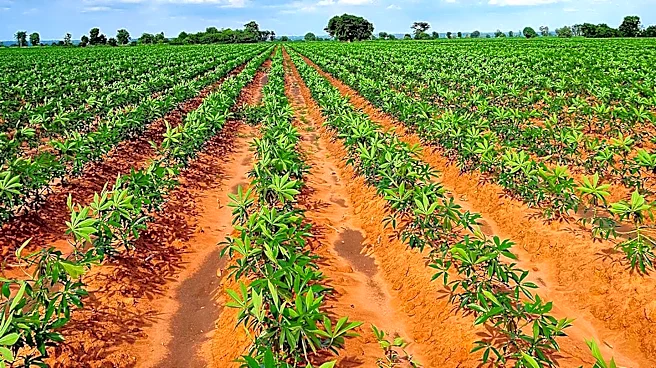
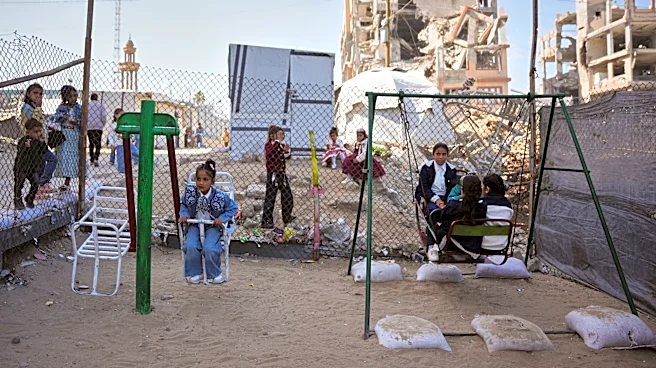
A joint assessment by the FAO and UNOSAT reveals limited rehabilitation of greenhouse infrastructure in Gaza, with most remaining damaged and out of production. Despite this, there are encouraging signs of recovery in the livestock sector, with increases
in sheep and goat populations. The recovery is driven by emergency support following a ceasefire. However, significant constraints remain, including restrictions on land and sea access and limited availability of agricultural inputs. The FAO is supporting recovery efforts through cash assistance, livestock support, and technical guidance.
Why It's Important?
The recovery of Gaza's agriculture and livestock sectors is crucial for improving food security and reducing dependence on humanitarian aid. The increase in livestock populations and rehabilitation of greenhouses are positive developments, but the ongoing challenges highlight the need for sustained support and investment. The restrictions on access and availability of inputs continue to hinder recovery efforts, emphasizing the importance of addressing these issues to ensure long-term sustainability and resilience in Gaza's agrifood system.
What's Next?
The FAO will continue to support recovery efforts through cash assistance and technical guidance. The organization is scaling up its programs to reach more farming households and increase the availability of agricultural inputs. The success of these efforts will depend on addressing the constraints on access and availability of resources. The international community's support and investment will be crucial for rebuilding Gaza's agrifood system and reducing long-term dependence on aid.