
What's Happening?
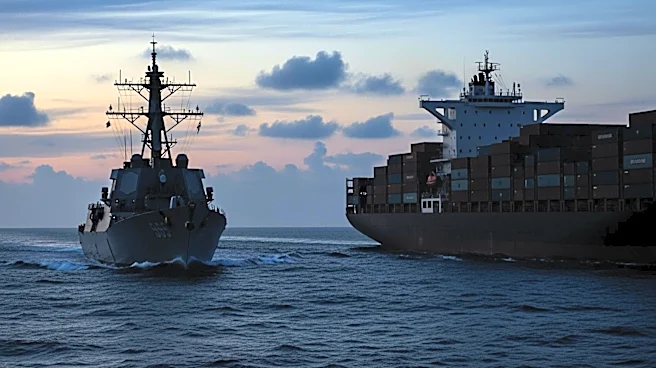
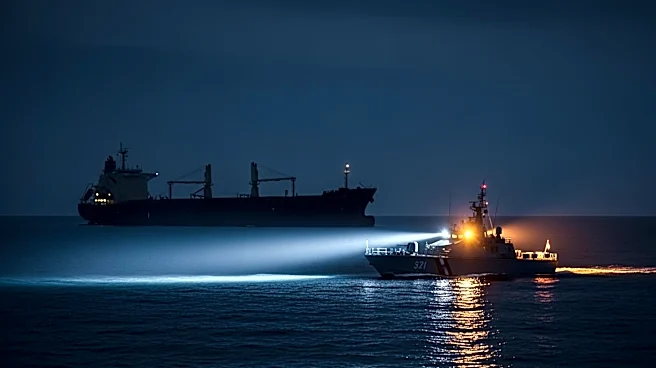
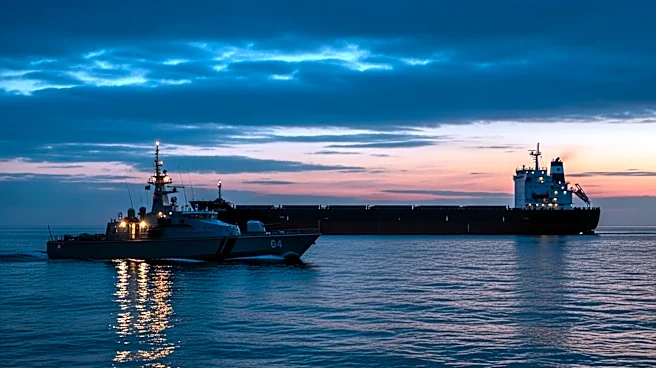
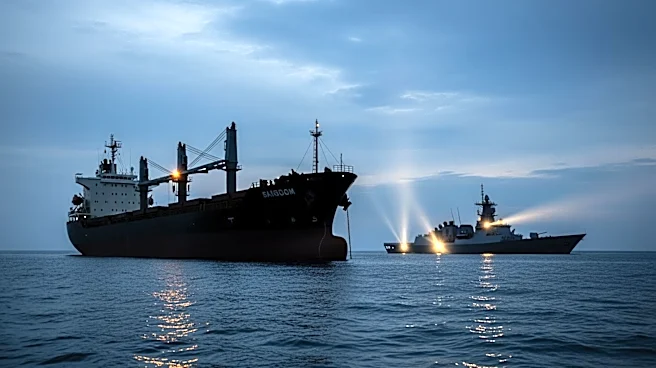
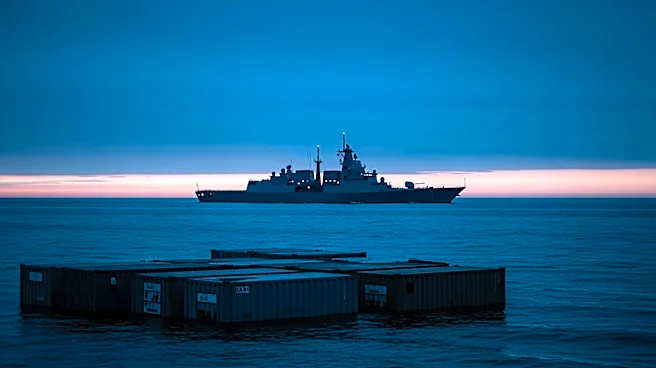
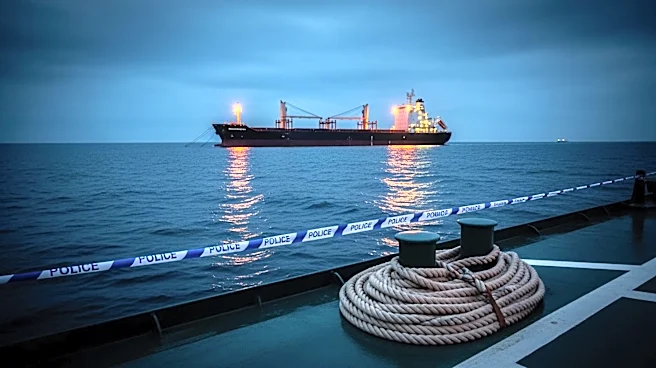
The USS Spruance, a US destroyer, intercepted and seized the Iranian-flagged vessel 'Touska' as it was heading towards an Iranian port. This action was taken in response to the ship allegedly violating
a blockade. The incident has escalated tensions between the US and Iran, with Iran's military condemning the seizure as a breach of the temporary ceasefire agreement between the two nations. In retaliation, Iran has been accused of firing on ships attempting to pass through the Strait of Hormuz, further complicating the situation. The US Central Command released footage of the seizure, highlighting the ongoing maritime security challenges in the region.
Why It's Important?
This development is significant as it underscores the fragile nature of the US-Iran ceasefire and the potential for further military confrontations. The Strait of Hormuz is a critical chokepoint for global oil shipments, and any disruption could have substantial implications for international energy markets. The US's decisive action reflects its commitment to enforcing maritime security and maintaining the blockade, while Iran's response indicates its unwillingness to back down. This standoff could impact diplomatic relations and influence ongoing negotiations, with potential repercussions for regional stability and global economic conditions.
What's Next?
The situation remains tense, with both nations likely to engage in further diplomatic and military maneuvers. The US may increase its naval presence in the region to deter further Iranian actions, while Iran might seek to rally regional allies or escalate its military posture. International stakeholders, including the United Nations and neighboring countries, may intervene to de-escalate tensions and facilitate dialogue. The outcome of these developments could shape future US-Iran relations and influence broader geopolitical dynamics in the Middle East.