
What's Happening?
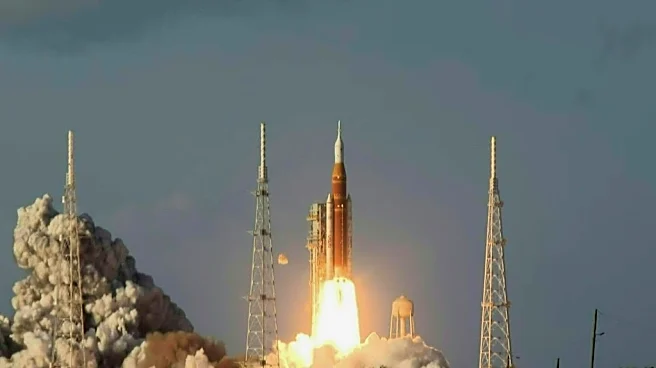
Rocket Lab successfully launched two Celeste navigation satellites for the European Space Agency (ESA) on March 28, 2026. The launch, conducted from New Zealand, marks the first European low Earth orbit
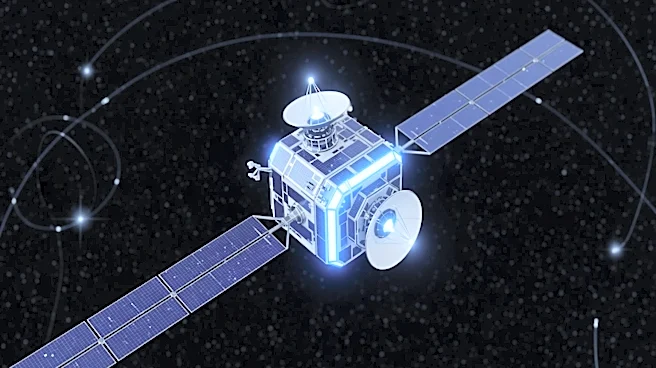
navigation demonstrator mission. The mission, named 'Daughter of the Stars,' placed the satellites into a circular Sun-synchronous orbit at an altitude of 510 km. These satellites, IOD-1 and IOD-2, are equipped with experimental payloads to test new signals in the L- and S-frequency bands. This initiative is part of ESA's efforts to enhance the Galileo navigation system by adding a low Earth orbit (LEO) layer, which is expected to provide stronger signals and support new services such as autonomous transport and indoor navigation.
Why It's Important?
The successful launch of the Celeste satellites is a significant step in advancing Europe's navigation capabilities. By operating at a lower altitude than traditional navigation satellites, the Celeste satellites can provide stronger and more reliable signals, particularly beneficial in urban and polar regions where signal coverage is often challenging. This enhancement is crucial for the development of next-generation positioning technologies, which are essential for autonomous vehicles, Internet of Things (IoT) applications, and other emerging technologies. The mission underscores the importance of international collaboration in space exploration and technology development, as it involves partnerships between Rocket Lab and the European Space Agency.
What's Next?
The Celeste mission is just the beginning of ESA's plans to enhance the Galileo navigation system. ESA has proposed launching a total of 11 Celeste satellites by 2027 to complete the demonstration phase. These additional satellites will further test and validate the new multi-frequency signals and their applications. The success of this mission could lead to the deployment of a full LEO constellation, significantly improving navigation services across Europe and potentially influencing global navigation systems. Stakeholders in the technology and transportation sectors will likely monitor these developments closely, as they could impact future innovations and market opportunities.