








What's Happening?
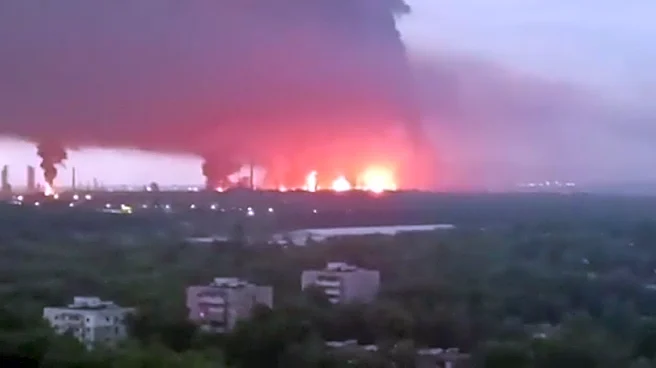
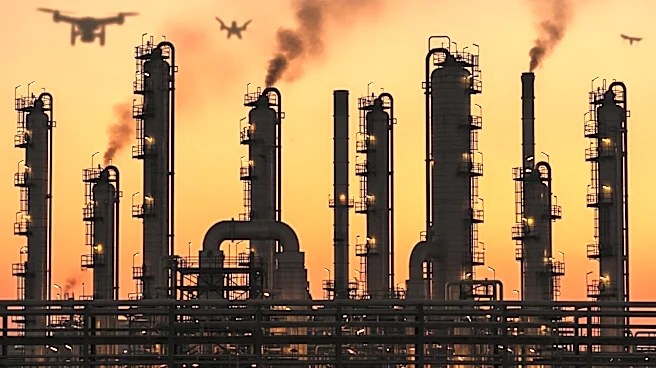
Recent Ukrainian drone attacks have led to the shutdown or reduction of production at several major oil refineries in central Russia. The Kirishi oil refinery, one of Russia's largest, has been closed since May 5. Other affected sites include refineries in Nizhny
Novgorod, Ryazan, Yaroslavl, and Moscow. These facilities collectively account for 30% of Russia's gasoline output and 25% of its diesel output. The attacks have significantly impacted Russia's refining capacity, which totals 83 million metric tons annually. The Kstovo oil refinery was targeted on May 20, marking the second attack on the site within a week. The strikes have caused fires and disruptions in production, highlighting the ongoing conflict's impact on Russia's energy sector.
Why It's Important?
The halting of production at these major refineries underscores the vulnerability of Russia's energy infrastructure amid the ongoing conflict with Ukraine. The affected refineries are crucial to Russia's domestic fuel supply, and their shutdown could lead to fuel shortages and increased prices. This disruption also highlights the strategic use of drone technology by Ukraine to target key economic assets in Russia. The attacks may further strain Russia's economy, which is already facing international sanctions and economic challenges. Additionally, the situation could have broader implications for global energy markets, potentially affecting oil prices and supply chains.
What's Next?
The continued targeting of Russian energy infrastructure by Ukrainian forces may lead to further disruptions in production and supply. Russia may respond by increasing security measures at its refineries and exploring alternative supply routes to mitigate the impact. The international community will likely monitor the situation closely, as further disruptions could affect global energy markets. Diplomatic efforts to de-escalate the conflict may also intensify, with potential implications for international relations and energy policies. The ongoing conflict and its impact on energy infrastructure highlight the need for strategic planning and resilience in the face of geopolitical tensions.