










What's Happening?
A U.S. Immigration and Customs Enforcement (ICE) officer shot and killed a man in Biddeford, Maine, during an immigration enforcement operation. The incident occurred as ICE officers were conducting surveillance on a residence linked to an individual
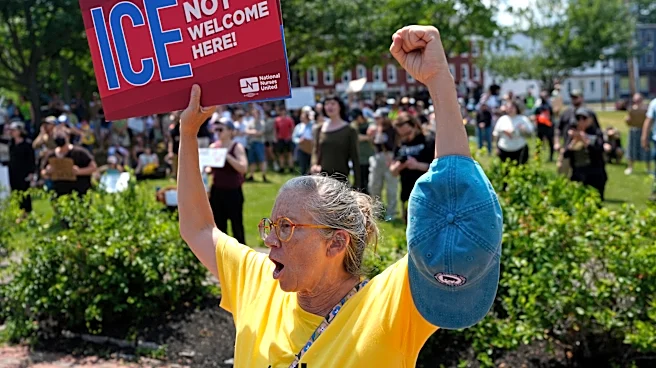
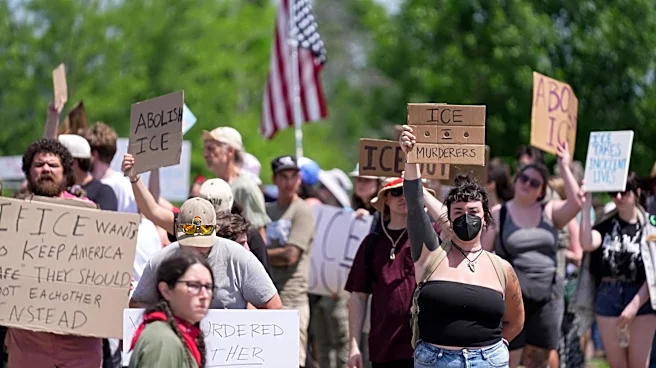
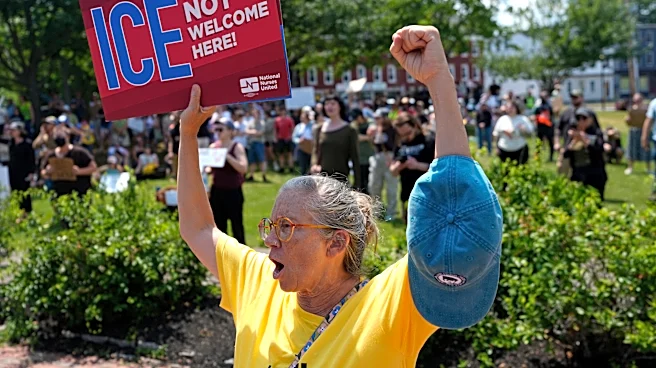
with a final order of removal. According to the Department of Homeland Security (DHS), the man attempted to flee in a vehicle, prompting the officer to open fire, fearing for public safety. The man, reportedly a 26-year-old Colombian authorized to work in the U.S., was not the target of the operation. This shooting follows a similar incident in Houston, Texas, where an ICE agent fatally shot a man during a traffic stop. These events have sparked protests and calls for accountability regarding ICE's use of force.
Why It's Important?
The incident highlights ongoing tensions surrounding ICE's enforcement tactics and the broader immigration policies under President Trump's administration. The increase in ICE operations and the use of deadly force have raised concerns among immigration advocates and civil rights groups. The shooting in Maine, coupled with the recent incident in Texas, underscores the potential for violence in immigration enforcement and the need for transparency and oversight. The events have prompted public outcry and protests, reflecting the contentious nature of immigration policy in the U.S. and its impact on communities, particularly those with significant immigrant populations.
What's Next?
The incident is likely to lead to further investigations by local and federal authorities to determine the justification for the use of deadly force. There may be increased scrutiny on ICE's operational procedures and calls for policy reforms to ensure accountability and prevent future incidents. Political leaders and advocacy groups are expected to continue pressing for changes in immigration enforcement practices. The situation may also influence public opinion and policy discussions ahead of upcoming elections, as immigration remains a key issue in U.S. politics.