
What's Happening?
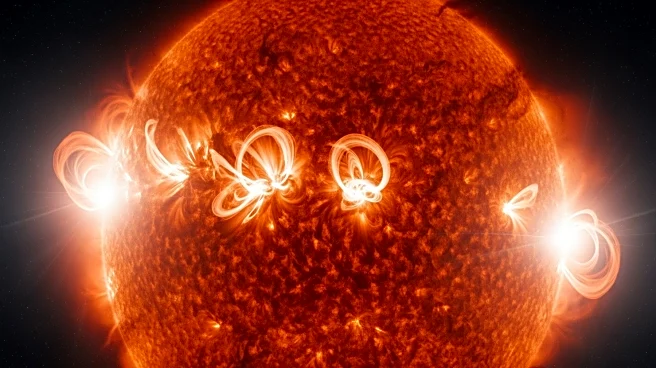
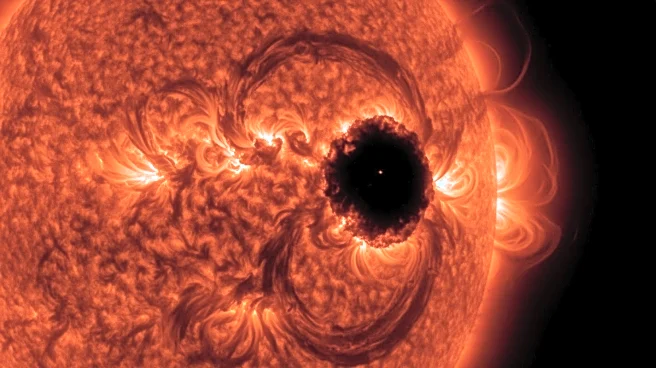
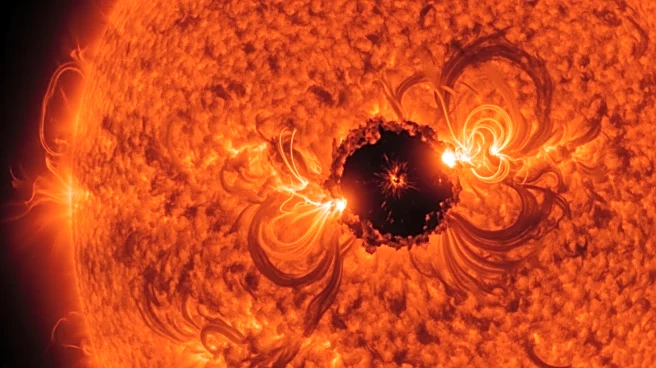
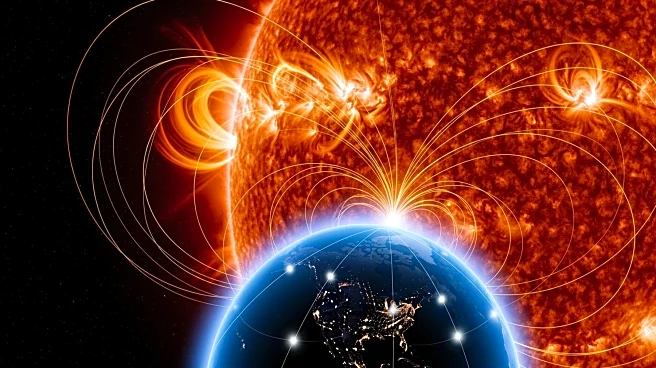
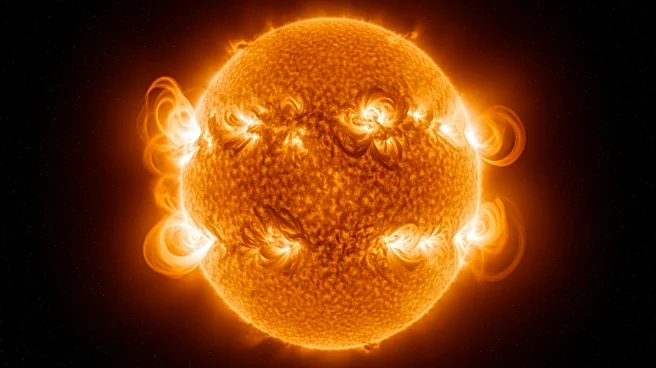
On January 3, 2026, Earth reaches its closest point to the sun in its annual orbit, an event known as perihelion. During this time, the sun appears slightly larger in the sky due to the reduced distance
of approximately 91.5 million miles from Earth. This phenomenon occurs because Earth's orbit is elliptical, causing variations in distance from the sun throughout the year. Despite the sun's larger appearance, this proximity does not significantly affect Earth's temperature or seasons, which are primarily influenced by the tilt of Earth's axis. Observers are advised to use proper solar filters when viewing the sun to prevent eye damage.
Why It's Important?
The perihelion event highlights the elliptical nature of Earth's orbit and its impact on astronomical observations. While the sun's increased size is subtle, it serves as a reminder of the dynamic relationship between Earth and its parent star. Understanding these orbital mechanics is crucial for astronomers and scientists studying solar influences on climate and weather patterns. Additionally, this event provides an opportunity for educational outreach, encouraging public interest in astronomy and the natural cycles of our solar system.
What's Next?
Following perihelion, Earth will continue its orbit, gradually increasing its distance from the sun until reaching aphelion, the farthest point, later in the year. This cycle will repeat annually, offering regular opportunities for observation and study. Astronomers may use this period to conduct research on solar radiation and its effects on Earth's atmosphere. Public interest in such events can lead to increased participation in astronomy clubs and educational programs.