







What's Happening?
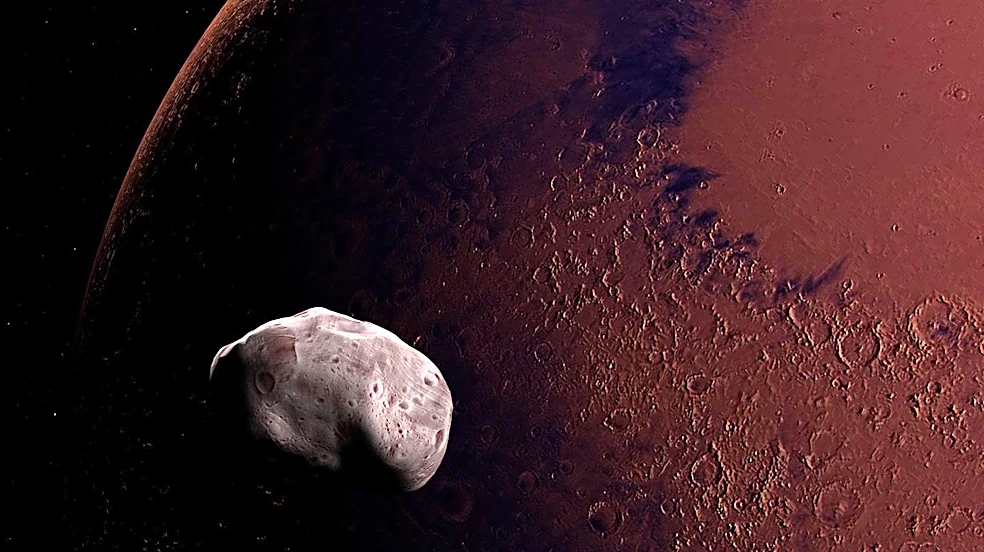
NASA is playing a significant role in the Japan Aerospace Exploration Agency's (JAXA) Martian Moons eXploration (MMX) mission, which aims to enhance the understanding of Mars' moons, Phobos and Deimos. The mission's primary goal is to characterize these
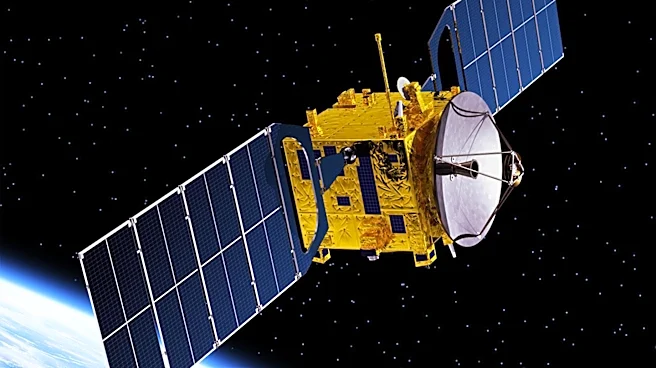
moons, determine their origin, and return a sample of Phobos to Earth. The MMX spacecraft is scheduled to launch from JAXA’s Tanegashima Space Center in Japan on October 19, 2026. NASA's contributions include providing the Mars-moon Exploration with Gamma rays and Neutrons (MEGANE) spectrograph instrument, the Pneumatic Sampler (P-Sampler) technology demonstration, and communication and navigation support through its Deep Space Network. Additionally, NASA is funding U.S. scientists participating in the MMX science team. The data and samples collected by the MMX mission are expected to provide crucial insights into the origins of these moons and the broader history of the solar system, addressing long-standing scientific debates about whether they are remnants of a massive impact on Mars or captured ancient asteroids.
Why It's Important?
This international collaboration is vital for advancing humanity's understanding of planetary formation and the early solar system. The MMX mission's success in collecting and returning samples from Phobos will provide paradigm-shifting scientific data, which is particularly significant as NASA prepares for future human missions to Mars. The insights gained from studying Phobos's composition and origin could inform strategies for resource utilization and hazard mitigation for future Martian explorers. The partnership between NASA and JAXA also highlights the growing importance of international cooperation in complex space exploration endeavors, pooling resources and expertise to achieve ambitious scientific goals that would be challenging for any single nation to undertake alone. The mission's findings could also shed light on the processes by which Earth and other inner planets acquired water and organic compounds, offering a deeper understanding of the conditions necessary for life.
What's Next?
The MMX spacecraft is slated to arrive at Mars in August 2027 to commence its detailed survey of Phobos and Deimos. Following the survey, the spacecraft will collect a surface sample from Phobos no earlier than December 2028, with the sample expected to be delivered to Earth in 2031. Upon its return, NASA will obtain and curate approximately 15% of the total sample at its Johnson Space Center Astromaterials Lab in Houston, making it available for research for decades. NASA-supported researchers will continue to work alongside international colleagues, utilizing mission data and the returned samples to uncover new clues about the moon's origin and the evolution of the Mars system. The ongoing analysis of these samples will likely lead to numerous scientific publications and further research, continually expanding our knowledge of the Martian system and beyond.
Beyond the Headlines
The MMX mission's success could have profound implications beyond immediate scientific discoveries. The development of advanced sampling technologies like the P-Sampler, which uses high-pressure nitrogen gas, represents a significant technological leap in space exploration, potentially paving the way for similar sample return missions from other celestial bodies. The long-term curation of samples at NASA's Astromaterials Lab ensures that future generations of scientists, equipped with even more advanced analytical techniques, can continue to study these extraterrestrial materials. This mission also reinforces the ethical considerations of international space exploration, emphasizing shared scientific goals and the responsible handling of extraterrestrial samples. The collaborative spirit of the MMX mission could serve as a model for future large-scale international scientific projects, fostering global cooperation in addressing fundamental questions about the universe.