








What's Happening?
Kimberly Nesbitt, an associate professor at the University of New Hampshire, advocates for the integration of play into early-grade learning environments. This approach is gaining traction in several states, including New Hampshire, Connecticut, Iowa,
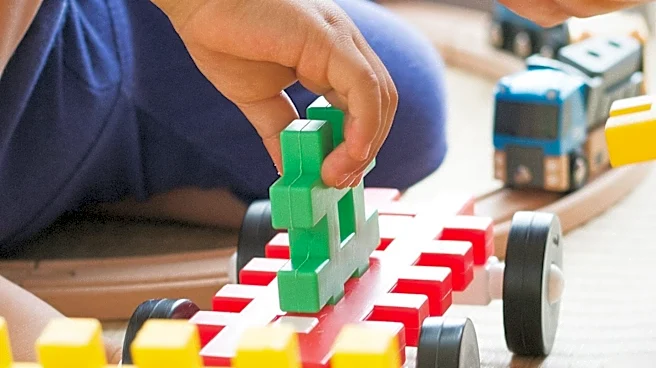
and Oklahoma, where legislation has been introduced to support play-based learning in early education. Nesbitt emphasizes that play should align with academic standards and serve as a tool for students to apply knowledge actively. She has been instrumental in training educators on how to incorporate guided play, which balances teacher guidance with student autonomy, into their classrooms. This method is designed to enhance cognitive development by encouraging students to engage in critical thinking and problem-solving through playful activities.
Why It's Important?
The integration of play into early education is significant as it addresses the need for more engaging and effective learning methods. By allowing students to apply knowledge through play, educators can foster deeper understanding and retention of information. This approach also supports the development of social-emotional and motor skills, which are crucial for holistic child development. As educational standards continue to evolve, incorporating play-based learning can help bridge the gap between traditional instruction and the need for innovative teaching strategies. This shift could lead to more dynamic and adaptable educational environments, ultimately benefiting students by making learning more enjoyable and impactful.
What's Next?
As more states consider adopting play-based learning frameworks, educators and policymakers will need to collaborate to ensure successful implementation. This may involve revising curricula, providing professional development for teachers, and securing resources to support this educational shift. The success of these initiatives will likely depend on ongoing research and feedback from educators who are already implementing play-based strategies. Additionally, as the benefits of play in education become more widely recognized, there may be increased advocacy for similar reforms in other educational levels and settings.