








What's Happening?
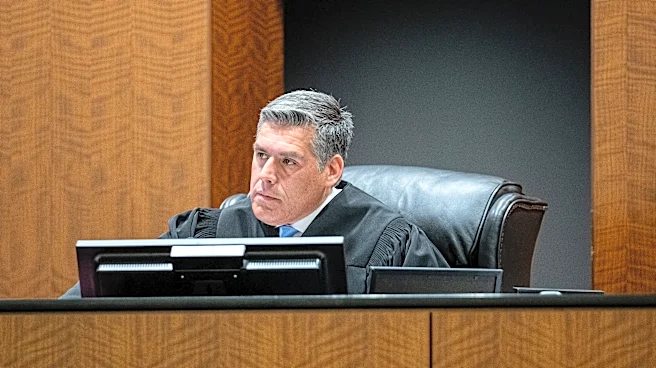
Utah Supreme Court Justice Diana Hagen has resigned following allegations of a conflict of interest related to her involvement in a redistricting case. The allegations centered around a possible connection between Hagen and David Reymann, a former lead
attorney for the League of Women Voters, who challenged the legality of Republican-proposed congressional maps. Hagen had previously denied any conflict, stating her last involvement in the case was in October 2024, and she recused herself from related cases in May 2025. Despite the Judicial Conduct Commission dismissing the complaint, Hagen chose to resign to protect the privacy of those she cares about and to maintain the court's independence. Governor Spencer Cox acknowledged her service and indicated that the process to fill her vacancy would be announced soon.
Why It's Important?
Hagen's resignation highlights the sensitivity and potential impact of judicial conduct on public trust in the legal system. The allegations and subsequent resignation could influence public perception of judicial impartiality, especially in politically charged cases like redistricting. This development may prompt further scrutiny of judicial conduct and the processes in place to address potential conflicts of interest. It also underscores the importance of maintaining transparency and accountability within the judiciary to uphold public confidence. The situation may lead to discussions on reforming the Judicial Conduct Commission to ensure it meets high standards of accountability.
What's Next?
Governor Cox and other state leaders have expressed a commitment to reviewing and potentially reforming the Judicial Conduct Commission. This could involve legislative action to enhance the commission's oversight capabilities and ensure it effectively addresses ethical concerns. The process to appoint a new justice will be closely watched, as it could impact the ideological balance of the Utah Supreme Court. Stakeholders, including political leaders and civil society groups, may advocate for a transparent and rigorous selection process to restore public confidence in the judiciary.